
It usually starts subtly and unnoticed: The contrasts of your surroundings fade, colors suddenly seem less vibrant, and during nighttime driving, the headlights of oncoming traffic are unusually glaring. Many people describe this condition as if they were looking through a slightly dirty windowpane or a light fog. If these signs sound familiar to you, you may be suffering from cataracts, also known in medical terms as a cataract.
Cataracts are the most common cause of declining vision in old age worldwide. But here's the good news upfront: this eye disease is today as treatable as hardly any other, and with comparable safety. In this comprehensive guide, you will learn everything you need to know about its development, the most modern cataract treatment, various lens models, and the path back to clear vision.

What exactly is glaucoma and how does it develop?
In a healthy, young eye, the natural lens is crystal clear. It focuses incoming light sharply onto the retina at the back of the eye. However, with increasing age, the metabolism of the lens changes. Certain proteins that make up the lens begin to clump together. This causes the lens to lose its elasticity and, more importantly, its transparency. Incoming light is scattered instead of being focused.
Among the most common causes of blurred vision in old age is this natural aging process of the eye lens. Rarer triggers for cataracts can include metabolic diseases such as diabetes, long-term cortisone use, eye injuries, or intense UV radiation.
Glaucoma and Cataract Differences: No Risk of Confusion
Cataracts and glaucoma are repeatedly confused, yet they are fundamentally different diseases. While a cataract is a clouding of the eye's lens that can be completely cured through surgery, glaucoma is typically damage to the optic nerve caused by high intraocular pressure. Untreated glaucoma can lead to irreversible vision loss. It is important to know the differences between glaucoma and cataracts in order to react quickly and correctly to corresponding symptoms.
Cataract Symptoms: How Your Body Warns You
The disease does not cause pain and often initially proceeds without noticeable limitations. Only when the clouding reaches the optical center of the lens do cataracts symptoms become noticeable.
If you want to identify cataracts symptoms, you should pay attention to the following warning signs:
- Nebula viewing The most typical sign. They look blurry, as if through a light veil.
- Increased light sensitivity: Especially with the sun low in the sky or at night in road traffic, eyes react extremely sensitively to light.
- Color loss The world appears increasingly tinged with yellow or brown, and strong colors are fading.
- Double images Sometimes double vision occurs, even when you only look with one eye.
- Frequent eyeglass changes If your vision changes significantly over short periods, it could be an indication of a progressing cataract.
To detect such changes in time, regular preventive examinations for the early detection of eye diseases by an ophthalmologist are essential – especially from the age of 60 onwards.
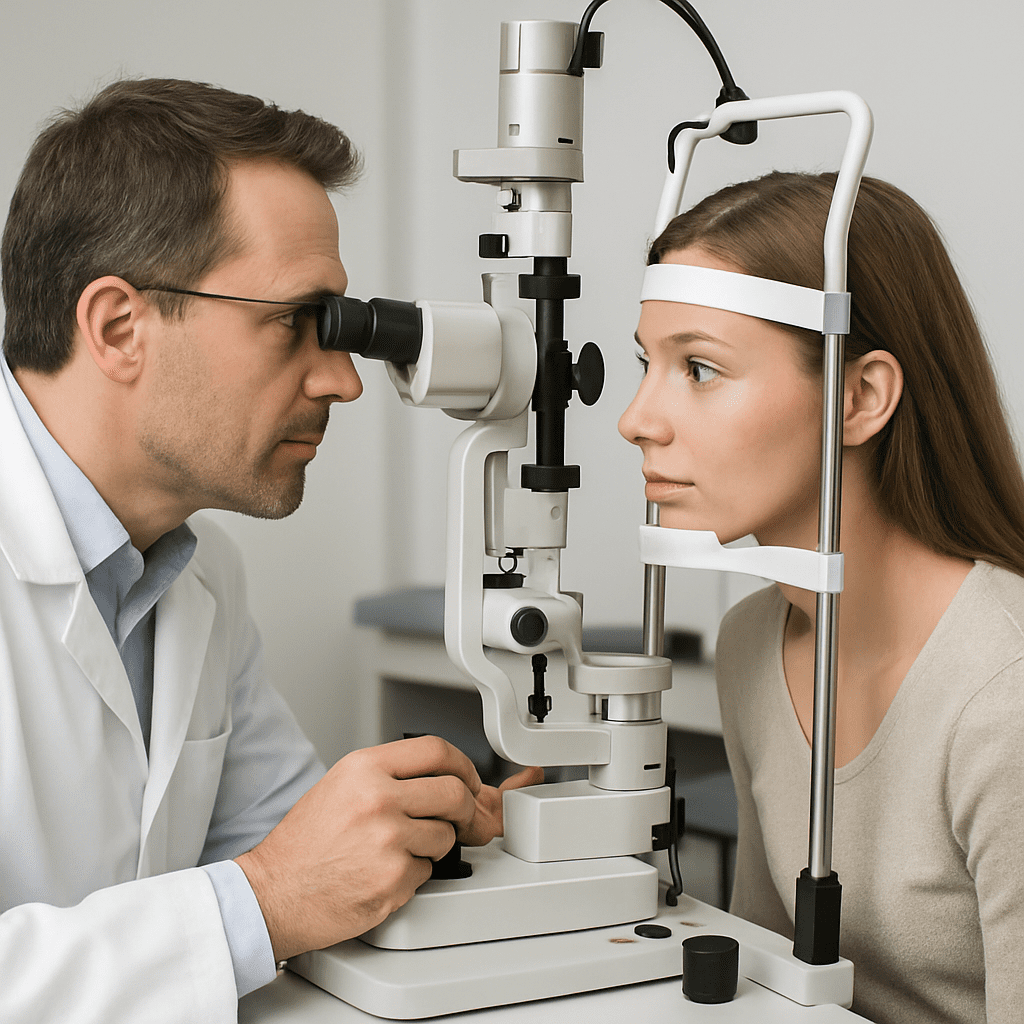
When does a cataract need to be operated on?
Many patients ask themselves after diagnosis: When is lens surgery advisable? The answer to this is highly individual. Since the clouded lens cannot be cleared by medication, eye drops, or eye training, surgery is the only way to heal.
Doctors used to advise letting cataracts „ripen.“ This view is now considered outdated. Surgery is worthwhile when you experience limitations in your daily life, hobbies, or driving. As long as new glasses help you see well and you don't feel restricted, there's no rush. However, once your quality of life suffers due to poor vision, you should plan for the procedure.
Cataract Treatment: A Routine Procedure with Significant Impact
Cataract surgery is the most frequently performed surgical procedure in medicine. In Germany alone, it is successfully performed well over 800,000 times annually. Many patients are positively surprised when it comes to the cataract surgery procedure and duration: the actual surgery often takes only 15 to 20 minutes per eye. The surgery is usually performed on an outpatient basis, so you can return to your usual surroundings just a few hours later.
Modern surgical techniques and anesthesia
General anesthesia is usually not required for the procedure. Gentle local anesthesia for eye procedures – usually in the form of special numbing eye drops – is completely sufficient. You will be awake during the operation, but will not feel any pain, only perhaps a slight sensation of pressure.
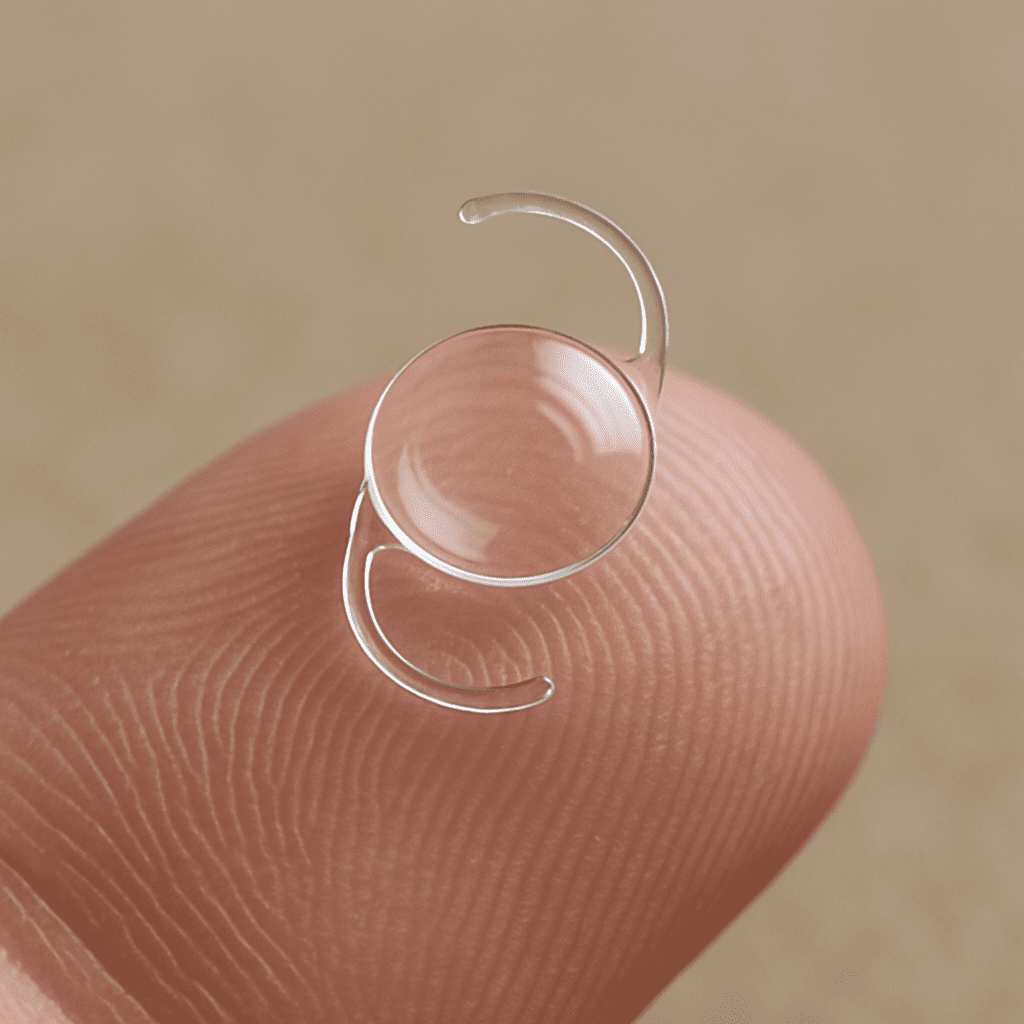
Once the eye is anesthetized, state-of-the-art technology is used. The proven phacoemulsification technique is usually explained here: The surgeon makes a tiny incision, only a few millimeters in size, at the edge of the cornea. Through this access, a small ultrasound probe is inserted into the eye. The ultrasound waves gently break the hard, cloudy lens of the eye into tiny fragments, which are simultaneously suctioned out (emulsification). The outer capsule of the natural lens remains intact. It then serves as a custom-fit „pocket“ for the new artificial intraocular lens (IOL). The new lens is inserted into the eye folded, where it gently unfolds and is fixed in the capsule with the help of small haptics.
Since the cut is extremely small, it usually closes on its own like a valve and does not need to be stitched.
The agony of choice: Monofocal lens or premium lens?
A crucial step before surgery is the selection of the artificial intraocular lens. Modern ophthalmology offers fascinating possibilities that go far beyond simply correcting cloudiness. You are essentially facing a comparison between multifocal and monofocal lenses.
Monofocal Lenses (Standard Lenses): These lenses have exactly one focal point. Before the surgery, you decide whether you want to see clearly in the distance (e.g., while driving or watching TV) or up close (while reading) in the future. For the other distance, you will still need glasses after the surgery. These lenses are fully covered by statutory health insurance.
Multifocal Lenses (Premium Lenses): These are state-of-the-art high-tech multifocal lenses. They allow for sharp vision at different distances – near, intermediate (e.g., computer screen), and far. The benefits of premium lenses for eyeglass wearers are immense: in most cases, patients can completely forgo bifocal or reading glasses after receiving multifocal lenses. Astigmatism can also be corrected directly with special toric premium lenses.
Costs for artificial eye lenses: While health insurance covers the cost of the surgical technique and standard monofocal lenses, multifocal and special lenses are considered an individual health benefit. The co-payment for premium lenses varies depending on the lens type, technology, and clinic, but it usually ranges between 1,000 and 2,500 euros per eye. Considering that you may never have to have expensive progressive glasses made again, many patients see this as an extremely worthwhile investment in themselves.
The Journey Back to Everyday Life: Aftercare and Healing
The operation is over, the new lens is in place. Now the question arises: how long does healing take after eye surgery? The good news: Already on the day after surgery, when the eye patch is removed during the first follow-up examination, many patients experience a real „wow effect.“ Colors shine again, the world appears brighter and clearer. Nevertheless, the eye needs some time to regenerate completely.
Final visual acuity is usually achieved after about four to six weeks. During this time, the brain also adapts to the new visual impressions (especially with multifocal lenses).
Important Post-Eye Surgery Behavior
To ensure a smooth healing process, your cooperation as a patient is required. The correct behavior after eye surgery is crucial for a perfect outcome:
- Don't rub! Even if the eye itches slightly or feels like there's a foreign body in it for the first few days (which is completely normal), you must not rub or press it under any circumstances.
- Apply eye drops regularly: You will receive anti-inflammatory and antibiotic eye drops. Administer them exactly according to your doctor's prescribed schedule.
- Protection from dirt and water: Avoid swimming pool visits, saunas, and the entry of tap water or shampoo into your eye during the first few weeks.
- Physical rest In the first few days, avoid heavy lifting (over 10 kg) and extreme endurance sports. Light walks, on the other hand, are perfectly fine.
- Wear safety glasses: In the first few days outdoors, wear sunglasses to protect your sensitive eyes from wind, dust, and glare.
What happens when vision becomes cloudy again? (After-cataract)
In some cases (in about 20 to 30 percent of patients), vision can worsen again months or even years after a successful cataract surgery. Don't panic – the new artificial lens cannot become cloudy! What happens here is called „posterior capsular opacification“ (fibrosis of the capsular bag). The capsular bag, in which the artificial lens sits, becomes populated by the body's own cells and clouds over.
Fortunately, posterior capsule opacification treatment with a YAG laser is extremely uncomplicated. The ophthalmologist uses a special laser to „shoot“ a tiny opening into the clouded capsule wall, completely painlessly and within seconds. The procedure is performed as an outpatient visit in the practice, and you will immediately see crystal clear afterward. A repeat operation in the conventional sense is not necessary, and posterior capsule opacification does not return after laser treatment.
Conclusion: Back to colors, contrasts, and joie de vivre
Today, a diagnosis of cataracts is no longer a cause for concern. Thanks to minimally invasive, outpatient procedures, gentle anesthesia, and highly precise artificial lenses, treatment is safer and more efficient than ever before. Whether you opt for a reliable standard lens or invest in a premium lens to go through life without glasses in the future – the result is usually the same: the increase in quality of life through lens implantation is enormous for most patients. Reading, driving, recognizing faces, and enjoying nature become a joy again.
If you feel your eyesight is declining, don't hesitate. Schedule a preventive eye exam with your ophthalmologist. Often, a minor procedure is all it takes to literally open your eyes to the beauty of life again.