
Dieser Artikel erklärt, wie ein Bandscheibenvorfall entsteht, wie er sich äußert und welche Behandlungsmöglichkeiten es gibt.
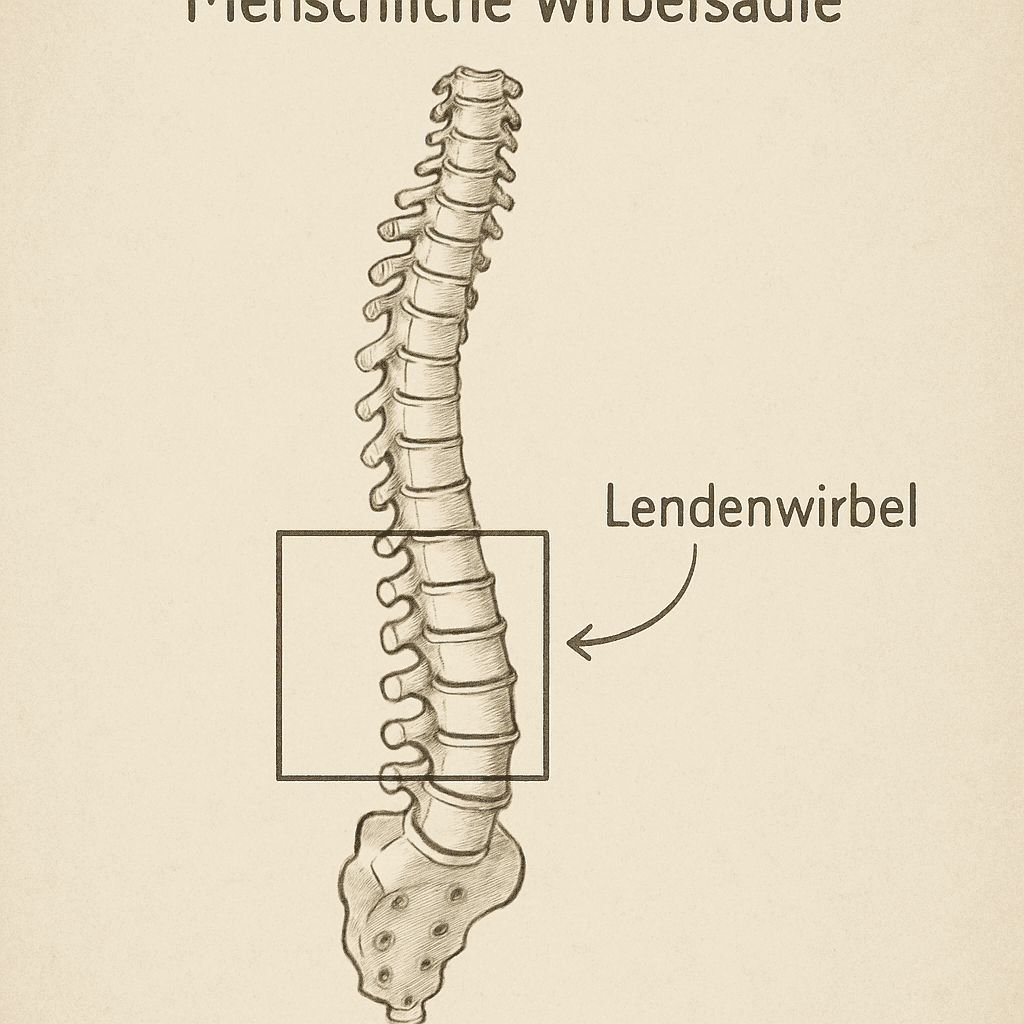
Was passiert bei einem Bandscheibenvorfall?
Zwischen den Wirbeln liegen die Bandscheiben. Sie bestehen aus einem gallertartigen Kern (Nucleus pulposus) und einem festen Faserring (Anulus fibrosus). Die Bandscheiben federn Druck ab und ermöglichen die Beweglichkeit der Wirbelsäule.
Mit dem Alter verliert der Gallertkern an Flüssigkeit. Die Bandscheiben werden flacher, der Faserring kann kleine Risse bekommen.
Vorwölbung und Vorfall: der Unterschied
- Bandscheibenvorwölbung (Protrusion): Der Gallertkern wölbt sich nach außen und drückt den noch intakten Faserring in Richtung Nerven oder Rückenmark.
- Bandscheibenvorfall (Prolaps): Der Faserring ist gerissen. Gallertartiges Material tritt aus und kann auf umliegende Nerven drücken oder Entzündungen auslösen.
Typische Beschwerden
Nicht jeder Bandscheibenvorfall verursacht Schmerzen. Manche Betroffene bemerken ihn gar nicht. Wenn ausgetretenes Gewebe auf Nerven drückt, können die Beschwerden jedoch deutlich sein.
Welche Symptome auftreten, hängt vom betroffenen Wirbelsäulenabschnitt ab. Am häufigsten ist die Lendenwirbelsäule betroffen, danach die Halswirbelsäule. Ein Vorfall im Bereich der Halswirbelsäule zeigt sich meist durch Nackenschmerzen, die in Schultern, Arme oder Finger ausstrahlen können, teils begleitet von Kopfschmerzen oder Schwindel.
Im unteren Rücken sind oft einschießende Schmerzen typisch, die vom Gesäß über die Oberschenkelrückseite bis in den Fuß ziehen – ein Hinweis auf eine Reizung des Ischiasnervs.

Anzeichen einer Nervenkompression
Reine Rückenschmerzen deuten häufiger auf muskuläre Verspannungen hin. Wenn Nerven betroffen sind, kommen neurologische Zeichen hinzu:
- Taubheitsgefühle in Armen oder Beinen
- Kribbeln oder „Ameisenlaufen“ auf der Haut
- Muskelschwäche (z. B. Schwierigkeiten beim Zehenspitzen- oder Fersenstand)
- Kontrollverlust über Blase oder Darm – das ist ein medizinischer Notfall
Diagnose
Bei anhaltenden Schmerzen oder neurologischen Symptomen sollte ein Arzt aufgesucht werden. Nach einer Anamnese werden Reflexe, Muskelkraft und Schmerzempfinden geprüft.
Zur Sicherung der Diagnose wird meist eine Magnetresonanztomografie (MRT) eingesetzt. Sie liefert detaillierte Bilder von Weichteilgewebe, Nerven und Bandscheiben. Wichtig ist dabei, den Befund immer im Zusammenhang mit den tatsächlichen Beschwerden zu bewerten. Eine sichtbare Veränderung ohne entsprechende Symptome erfordert nicht zwangsläufig eine Behandlung.
Akute Schmerztherapie
Im Akutstadium steht die Schmerzlinderung im Vordergrund.
Eine bewährte Methode ist die Stufenlagerung: Flach auf den Rücken legen, die Unterschenkel im 90-Grad-Winkel auf einem Stuhl oder einer ähnlichen Unterlage abstützen. Diese Position reduziert den Druck auf die Bandscheiben und den Ischiasnerv.
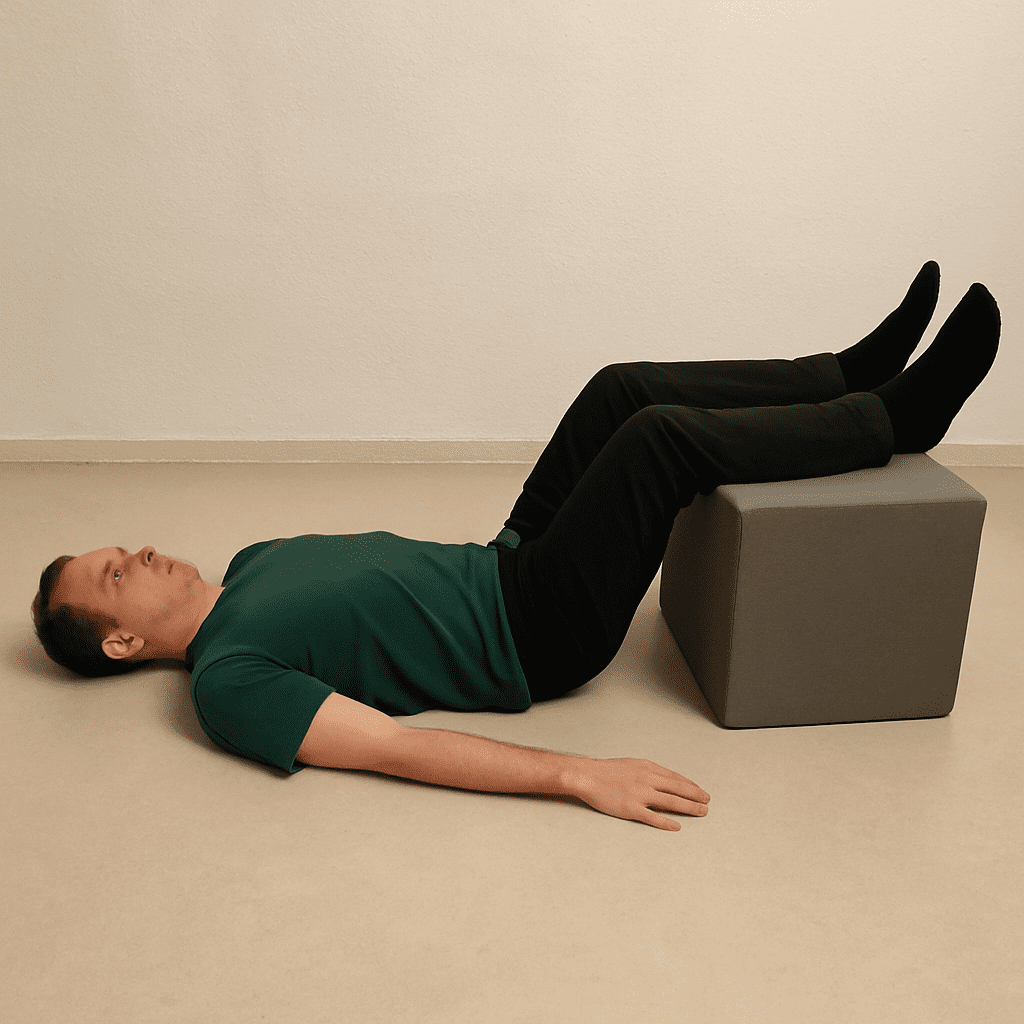
Ergänzend können entzündungshemmende Schmerzmittel wie Ibuprofen oder Diclofenac helfen, die der Arzt verschreibt. Wärme- oder Kälteanwendungen können zusätzlich lindern – was besser hilft, lässt sich individuell ausprobieren. Strenge Bettruhe sollte vermieden werden, da sie den Muskelabbau fördert.
Konservative Therapie oder Operation
Weit über 80 Prozent aller Bandscheibenvorfälle heilen ohne Operation ab. Abwehrzellen des Immunsystems können das ausgetretene Bandscheibengewebe im Laufe von Monaten abbauen.
Der nicht-operative Weg hat fast immer Vorrang. Die konservative Behandlung stützt sich auf drei Bereiche:
- Medication pain therapy: Um Bewegungsfähigkeit wiederherzustellen.
- Physical therapy Heat treatments, massages, or electrotherapy for muscle relaxation.
- Physical therapy Ein individuell angepasstes Trainingsprogramm zur Korrektur von Bewegungsmustern und zum Aufbau der stützenden Muskulatur.
Wann ist eine Operation notwendig?
Es gibt Situationen, in denen ein Eingriff notwendig ist:
- Bei einem Cauda-equina-Syndrom (Schädigung des Nervenbündels am unteren Rückenmarksende, oft mit Blasen- oder Mastdarmlähmung).
- Bei rasch fortschreitenden Lähmungen in Beinen oder Armen.
- Wenn starke Schmerzmittel über sechs bis acht Wochen keine ausreichende Linderung bringen.
In diesen Fällen kann ein minimalinvasiver Eingriff (Mikrodiskektomie) den Druck vom Nerv nehmen und dauerhafte Schäden verhindern.
Prevention and Long-Term Back Health
Ein aktiver Lebensstil hilft, einem Bandscheibenvorfall vorzubeugen oder einem Rückfall nach der Genesung entgegenzuwirken.
The right training
Die tiefen Rückenmuskeln (Multifidi) stabilisieren die Wirbelsäule direkt an der Basis. Da sie sich kaum bewusst anspannen lassen, trainiert man sie am besten durch Balance- und Stabilisationsübungen.
Auch die Rumpfmuskulatur insgesamt – Bauch, Beckenboden, Zwerchfell – sollte gestärkt werden. Geeignete Übungen sind:
- Unterarmstütz (Plank): Stärkt die gesamte Rumpfmuskulatur. Auf einen geraden Rücken achten.
- Vierfüßlerstand (Vogelhund): Abwechselnd gegenüberliegenden Arm und Bein ausstrecken.
- Glute Bridge In Rückenlage Beine aufstellen, Becken anheben bis Oberschenkel und Oberkörper eine Linie bilden.

Make your daily work life back-friendly
Since many people spend the majority of their day sitting, workplace ergonomics is a crucial factor in prevention.
- Dynamic sitting: Do not remain rigidly in one position. Change your posture frequently. Use ergonomic office chairs or stability balls.
- Standing desks Height-adjustable desks are a godsend for your back. Switch between sitting and standing hourly.
- Movement breaks Incorporate small stretching exercises into your daily office routine. Even a short walk to the copier or the break room helps the intervertebral discs absorb new nutrients.
Sick leave and return to daily life
Concern about job security often drives those affected. The duration of sick leave after back complaints cannot be stated in general terms, as it depends on the severity of the incident and the nature of the professional activity.
A patient with a purely desk-bound job, who was only diagnosed with a mild bulge, can often return to their desk after just one to two weeks – provided the workstation is ergonomically set up and short movement breaks are possible.
Those who perform heavy physical labor (for example, in construction or healthcare) or who have undergone surgery must expect a period of incapacity for work lasting six to twelve weeks, sometimes even longer. In many cases, the so-called „Hamburg Model“ (gradual reintegration) helps to slowly reacquaint the back with the workload without having to perform at one hundred percent immediately.
Conclusion: Don't panic about back pain
A herniated disc is undoubtedly a painful and stressful event. Nevertheless, it's not the end of the world. Our spine is a fascinating, robust, and enormously adaptable system. With the right diagnosis, a little patience during the acute phase, targeted therapy, and consistent muscular development, the symptoms can be managed excellently in most cases.
Listen to your body's signals. Use the pain as a wake-up call to pay more attention to your back in the future. By working ergonomically, exercising regularly, and strengthening your core muscles, you'll create the best conditions for a pain-free, active life. Keep moving – your back will thank you for it!
Quellen
