
Im Folgenden geht es darum, wie Magensäure funktioniert, wie sich Beschwerden lindern lassen und wann ein Arztbesuch sinnvoll ist.
Wie entsteht Sodbrennen?
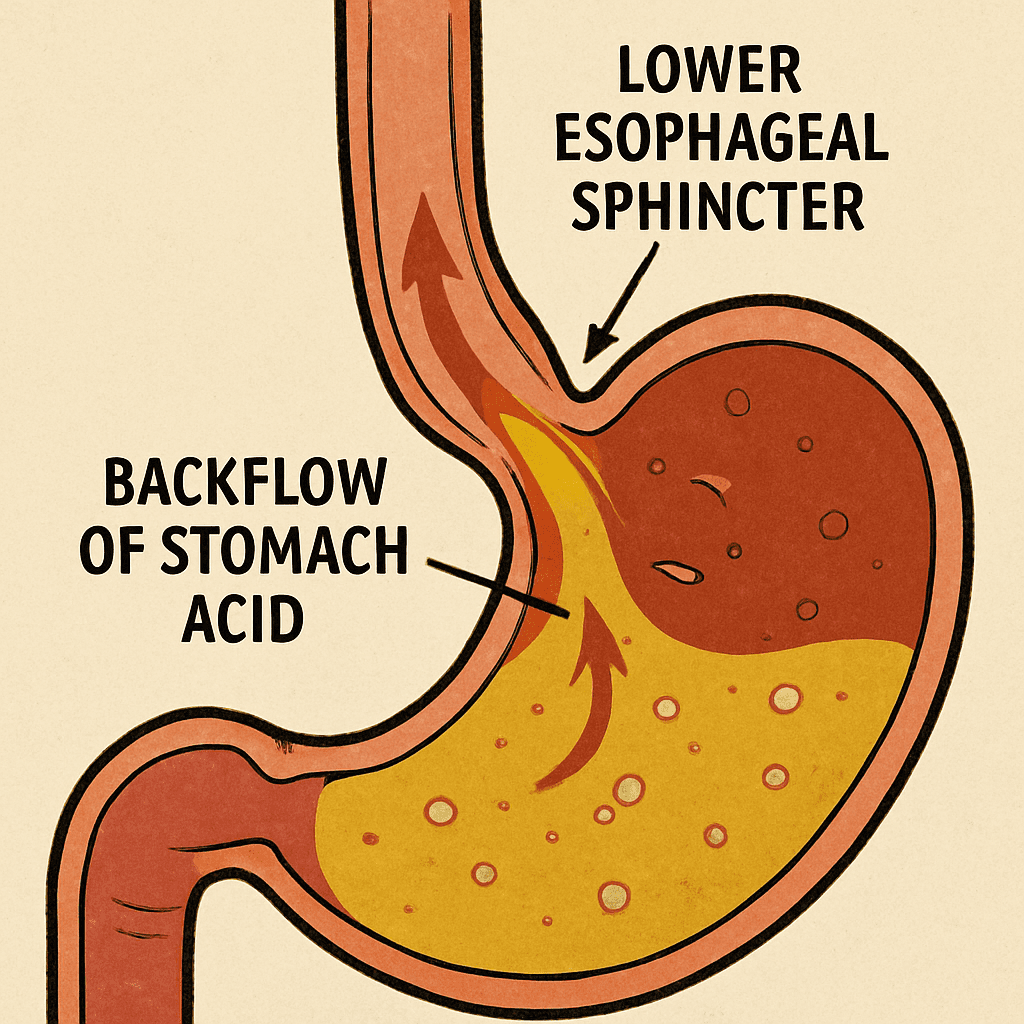
Wenn wir Nahrung schlucken, wandert sie durch die Speiseröhre in den Magen. Am Übergang zwischen beiden befindet sich ein ringförmiger Muskel, der untere Ösophagussphinkter. Er öffnet sich für die Nahrung und schließt sich danach wieder. Funktioniert dieser Verschluss nicht richtig, kann saurer Mageninhalt in die Speiseröhre zurückfließen. Da die Speiseröhrenschleimhaut – anders als die Magenschleimhaut – keine schützende Schicht gegen Säure besitzt, entsteht das typische Brennen.
Ursachen und Auslöser
Meist ist es eine Kombination aus mehreren Faktoren. Grob lassen sich diese in Lebensgewohnheiten, anatomische Besonderheiten und körperliche Zustände unterteilen.
Nutrition and Lifestyle
Fettreiche, stark gewürzte oder süße Speisen fördern die Säureproduktion. Dasselbe gilt für Kaffee, schwarzen Tee, Alkohol und Nikotin – sie regen die Säureproduktion an und entspannen gleichzeitig den Schließmuskel. Auch Stress spielt eine Rolle: Er beeinflusst das vegetative Nervensystem und kann die Magenentleerung verlangsamen.
Anatomical and physical factors
Bei einem Zwerchfellbruch (Hiatushernie) rutscht ein Teil des Magens durch das Zwerchfell in den Brustraum, was den Schließmechanismus beeinträchtigt. Auch starkes Übergewicht drückt auf den Magen und begünstigt den Säurerückfluss.
Special Life Stages
In der Schwangerschaft drückt der wachsende Bauch gegen den Magen. Gleichzeitig sorgt das Hormon Progesteron dafür, dass der Speiseröhrenschließmuskel erschlafft – beides begünstigt Sodbrennen.
Wann wird Sodbrennen zum Problem?
Gelegentliches Aufstoßen ist meist harmlos. Wird Sodbrennen jedoch chronisch, kann eine gastroösophageale Refluxkrankheit (GERD) vorliegen – dann schränkt der Säurerückfluss die Lebensqualität deutlich ein oder hat bereits Schäden an der Speiseröhre verursacht.
Zu den Anzeichen gehören neben dem Brennen auch chronischer Husten, Heiserkeit, häufiges Räuspern oder Zahnschmelzschäden. Unbehandelt kann chronischer Reflux zu Speiseröhrenentzündungen, Narbenbildungen oder dem sogenannten Barrett-Ösophagus führen – einer Gewebeveränderung, die als Vorstufe zu Speiseröhrenkrebs gilt.
Verwechslungsgefahr: Reflux oder Herzschmerz?
Das Brennen hinter dem Brustbein lässt sich manchmal schwer von Herzschmerzen unterscheiden, da die Nervenbahnen in der Brustregion eng beieinanderliegen.
- Reflux/Heartburn Tritt meist nach dem Essen oder im Liegen auf, begleitet von saurem Geschmack im Mund. Antazida bringen oft rasche Linderung.
- Heartache Fühlt sich eher wie Druck oder Engegefühl an, strahlt häufig in den linken Arm, Rücken, Hals oder Kiefer aus. Tritt oft bei körperlicher Anstrengung auf und kann von Atemnot oder Schweißausbrüchen begleitet sein.
Important: Bei plötzlichen, starken Brustschmerzen sollte immer sofort der Notruf verständigt werden.
Warum tritt Sodbrennen nachts auf?
Im Liegen wirkt die Schwerkraft nicht mehr zugunsten des Magens – die Säure kann ungehindert in die Speiseröhre fließen. Dazu kommt: Im Schlaf schlucken wir seltener. Speichel ist leicht alkalisch und hilft tagsüber, kleine Säuremengen zu neutralisieren. Fällt dieser Mechanismus nachts weg, bleibt die Säure länger in der Speiseröhre.
Ein erhöhter Oberkörper kann helfen. Ein zweites Kopfkissen reicht meist nicht aus, da es den Nacken abknickt. Besser ist es, das Kopfteil des Lattenrostes hochzustellen, ein keilförmiges Reflux-Kissen zu nutzen oder das Kopfende des Bettes um etwa 10 bis 15 Zentimeter anzuheben.

Hausmittel und natürliche Helfer
Bevor man zu Medikamenten greift, können einige einfache Mittel Linderung bringen:
- Natron Ein Teelöffel in einem Glas stillem Wasser aufgelöst wirkt schnell neutralisierend. Nur gelegentlich anwenden, da sonst ein Säure-Rebound-Effekt entstehen kann.
- Clay: Bindet überschüssige Magensäure und schützt die Schleimhäute. In Wasser einrühren und in kleinen Schlucken trinken.
- Zuckerfreier Kaugummi: Regt den Speichelfluss an und hilft, die Speiseröhre zu neutralisieren.
- Chamomile or fennel tea: Beruhigt den Magen und kann leichte Entzündungen mildern.
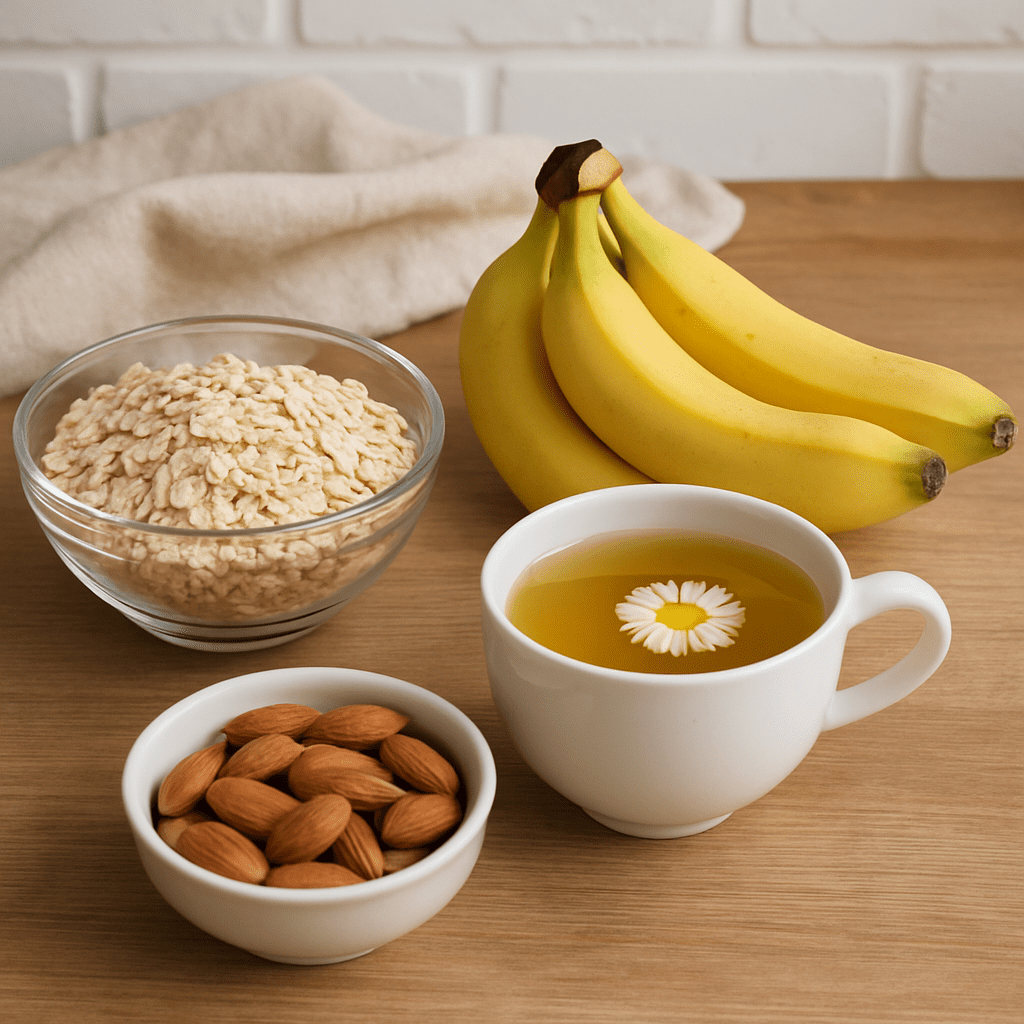
Auch bestimmte Lebensmittel können helfen: trockene Haferflocken, gut gekaute Mandeln, reife Bananen oder zimmerwarmes stilles Wasser. Kartoffelsaft gilt in der Naturheilkunde ebenfalls als bewährtes Mittel.
Dietary Tips for a Sensitive Stomach
- Several small meals: Lieber fünf kleine statt drei große Mahlzeiten. Ein voller Magen produziert mehr Säure und drückt stärker auf den Schließmuskel.
- Gut kauen: Je besser die Nahrung vorverdaut ist, desto weniger Arbeit hat der Magen.
- Time before bedtime: Letzte Mahlzeit mindestens drei bis vier Stunden vor dem Zubettgehen.
- Auslöser meiden: Tomaten, Zitrusfrüchte, Pfefferminze, Schokolade, scharfe Gewürze und frittierte Speisen können Sodbrennen begünstigen.
- Flüssigkeit klug einteilen: Ausreichend trinken, aber nicht in großen Mengen direkt zu den Mahlzeiten.
Medical Treatment: Acid Blockers vs. Natural Remedies
If lifestyle changes and home remedies are not enough, conventional medicine is available. Patients often face the choice: acid blockers versus natural remedies.
Among the best-known medications are the so-called proton pump inhibitors (PPIs), such as pantoprazole or omeprazole. They block the enzyme responsible for acid production in the stomach. They are extremely effective and allow the esophagus to heal tears and inflammation. However, they should not be considered a permanent solution without medical supervision. Long-term suppression of stomach acid can hinder nutrient absorption (such as vitamin B12, magnesium, and iron) and increase susceptibility to gastrointestinal infections, as acid also acts as a barrier against bacteria.
Besides PPIs, there are antacids, which neutralize already-produced acid, and alginates. The latter are derived from brown algae and form a protective gel layer that sits on top of the stomach contents in the stomach like a cap, thus physically preventing acid from rising – a gentler alternative positioned between medication and natural remedies.
The decision should always be made individually. Acute, severe inflammations often require temporary acid blockers, while mild, occasional discomfort can be excellently managed with natural remedies and dietary adjustments.
When to see a doctor for stomach problems?
Many people put up with their heartburn for far too long and reach for over-the-counter medications themselves for months. However, the question „When to see a doctor for stomach problems?“ can be clearly answered.
Be sure to visit an internal medicine or gastroenterology practice if:
- You suffer from heartburn more than twice a week.
- The complaints persist for more than 14 days despite home remedies or over-the-counter medications.
- You suddenly have difficulty swallowing or pain when swallowing.
- Unintended weight loss occurs.
- you frequently have to vomit or even notice blood in your vomit or stool (black stool).
- Heartburn is accompanied by persistent fatigue or anemia.
In these cases, the doctor will usually recommend a gastroscopy (gastroscopy). This examination is routine nowadays, completely painless, and provides exact images of the esophagus and stomach. Only in this way can inflammation, ulcers, tissue changes, or a hiatal hernia be reliably diagnosed.

Conclusion: Take your stomach seriously
Heartburn is undoubtedly an annoying and painful phenomenon that we often encounter in the modern world due to stress and rich diets. Whether it's triggered by a relaxing glass of red wine in the evening, a turbulent pregnancy, or a genetic predisposition – you are not helplessly at the mercy of these discomforts.
By using proven home remedies, paying attention to your diet, optimizing your sleeping position, and managing your stress levels more mindfully, you can often nip the inner fire in the bud. Listen to your body: Don't consider persistent heartburn normal, but rather what it is – an alarm signal. By taking timely action and seeking medical advice, you can protect your esophagus in the long term and regain a significant portion of your quality of life. Enjoy your meal and have a relaxed digestion!
Quellen
