
Angststörungen gehören zu den häufigsten psychischen Erkrankungen. Sie können schleichend beginnen oder plötzlich auftreten. Dieser Artikel erklärt, wie Angst im Gehirn entsteht und welche Methoden im Alltag helfen können.
Angst verstehen: Biologie und Psychologie
In der Psychologie wird zwischen Angst und Furcht unterschieden.
The difference between anxiety and fear
Furcht ist eine Reaktion auf eine konkrete, unmittelbare Bedrohung – etwa ein aggressiver Hund. Angst dagegen ist ein diffuses Gefühl, das sich auf eine unbestimmte Gefahr in der Zukunft richtet. Bei Angststörungen spielt genau dieses langanhaltende Gefühl eine zentrale Rolle, obwohl keine objektive Gefahr besteht.
Die Rolle der Amygdala
Die Amygdala (Mandelkern) funktioniert wie eine Alarmanlage im Gehirn. Nimmt sie einen Reiz als gefährlich wahr, schüttet sie Stresshormone wie Adrenalin und Cortisol aus. Bei Menschen mit Angststörungen reagiert sie oft überempfindlich – schon alltägliche Situationen wie ein voller Supermarkt können Alarm auslösen.
Symptome und Formen von Angststörungen
Ängste können Gedanken, Verhalten und Körper betreffen.
Physical reactions and psychosomatic complaints
Dauerhafte Angst belastet den Körper. Typische Beschwerden sind Verspannungen, Kopfschmerzen, Magen-Darm-Probleme oder Schwindel. Lässt sich keine organische Ursache finden, spricht man von psychosomatischen Beschwerden – oft ausgelöst durch unverarbeitete Emotionen und chronische Anspannung.
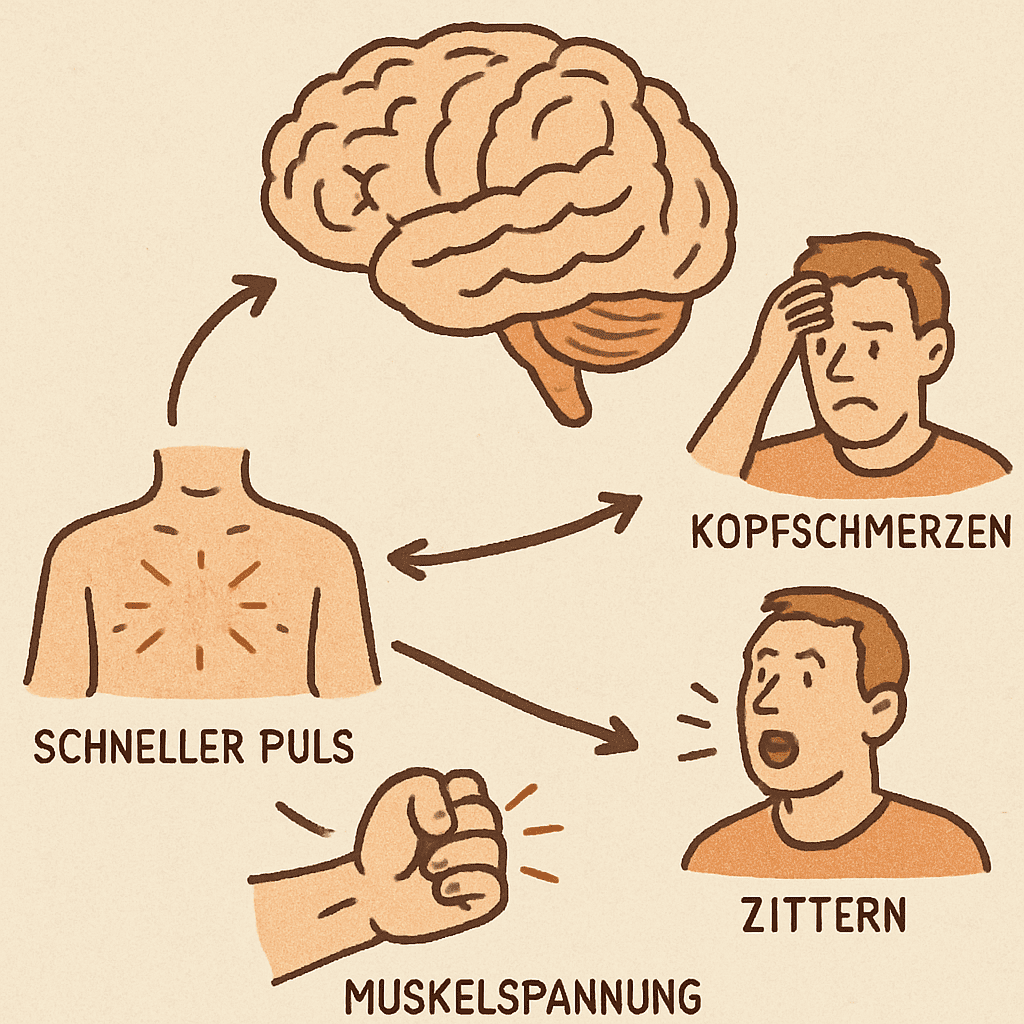
Recognizing the symptoms of a panic attack
Viele Betroffene verwechseln eine Panikattacke zunächst mit einem Herzinfarkt. Typische Anzeichen sind:
- Sudden, severe palpitations
- Shortness of breath or the feeling of suffocating
- Severe hot flashes
- Shaking all over
- A feeling of unreality (derealization)
- Death anxiety or the fear of going insane
Soziale Angst und Verlustangst
Soziale Angst äußert sich als intensive Furcht, in sozialen Situationen negativ bewertet oder abgelehnt zu werden. Alltägliche Situationen wie ein Gespräch auf einer Party oder eine Präsentation im Job können dadurch zur echten Belastung werden.
Verlustangst hat häufig Wurzeln in der frühen Kindheit. Trennungserfahrungen, ein unberechenbarer Erziehungsstil oder traumatische Erlebnisse können dazu beitragen, dass Menschen später panisch reagieren, wenn sie wichtige Bezugspersonen zu verlieren drohen. Das zeigt sich oft als starkes Klammern in Beziehungen.
What helps against inner restlessness? First aid strategies
In akuten Situationen helfen Strategien, die das Nervensystem schnell beruhigen.
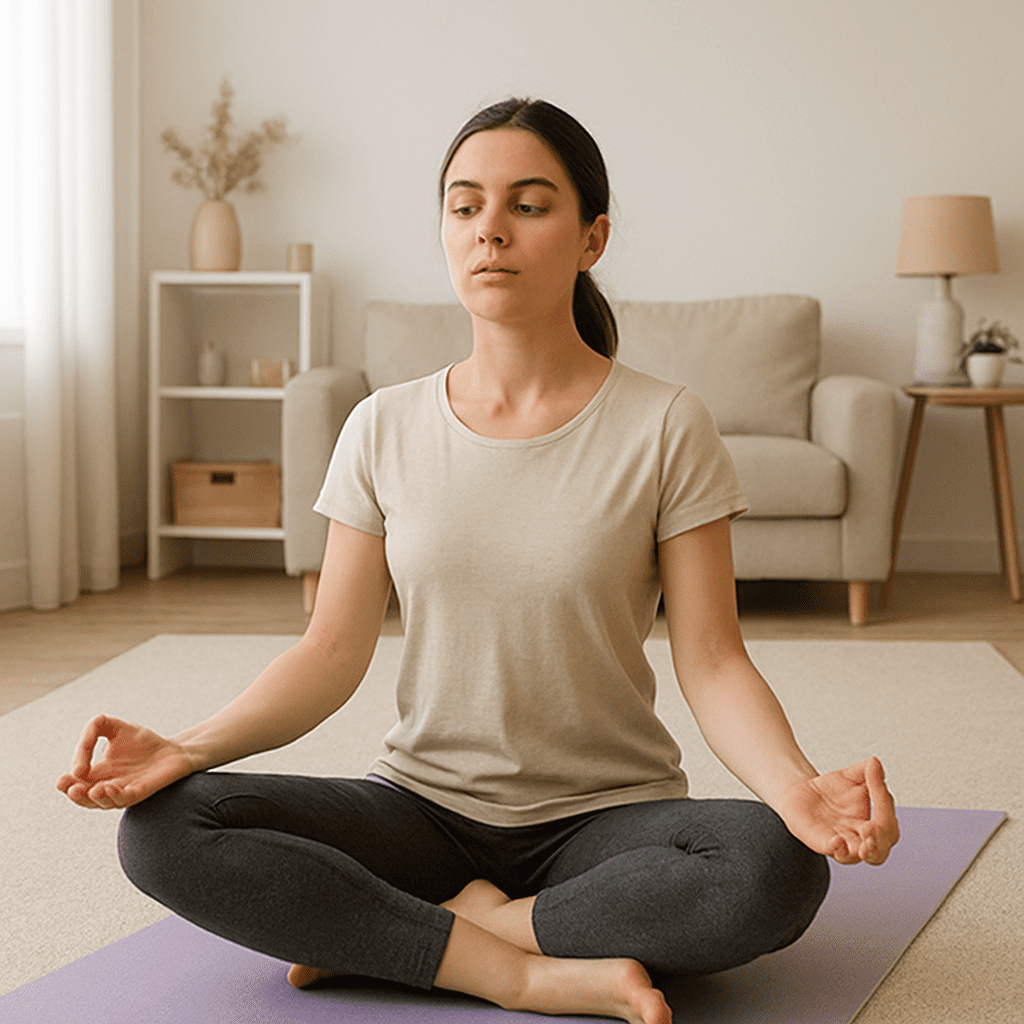
Breathing exercises for acute anxiety
Der Atem beeinflusst direkt das vegetative Nervensystem. Eine bewährte Methode ist die 4-7-8 Breathing:
- Inhale through your nose while silently counting to four.
- Hold your breath and count to 7.
- Langsam und hörbar durch den Mund ausatmen und dabei bis 8 zählen. Den Zyklus viermal wiederholen.
Grübeln stoppen
Gegen Gedankenschleifen hilft die Gedankenstopp-Technik: Wenn das Gedankenkarussell beginnt, innerlich (oder laut) „Stopp!“ sagen und die Aufmerksamkeit auf das Hier und Jetzt lenken. Die 5-4-3-2-1-Methode unterstützt dabei: Fünf Dinge sehen, vier spüren, drei hören – das holt aus dem Kopfkino zurück in den Moment.
Langfristige Strategien im Alltag
Soziale Phobie überwinden
Soziale Ängste lassen sich durch schrittweise Konfrontation (Exposition) trainieren:
- Start small: Einen Fremden nach der Uhrzeit oder dem Weg fragen.
- Maintain eye contact: Beim Bezahlen der Kassenperson kurz in die Augen schauen.
- Shedding Perfectionism Erlauben, rot zu werden oder ins Stocken zu geraten – das gehört zu normaler Kommunikation.
Natural sedatives for nervousness
Extrakte aus Baldrian, Passionsblume, Hopfen und Lavendel können das Nervensystem unterstützen. Hochdosiertes Lavendelöl in Kapselform hat in Studien Hinweise auf beruhigende Wirkung gezeigt. Vor der Einnahme empfiehlt sich eine Rücksprache mit dem Hausarzt.
Relaxation techniques for better sleep
- Progressive Muscle Relaxation (PMR): Muskelgruppen nacheinander anspannen und wieder loslassen – das hilft, körperliche Anspannung abzubauen.
- Sleep hygiene: Eine Stunde vor dem Schlafen keine Bildschirme nutzen, da blaues Licht die Melatonin-Produktion hemmt. Stattdessen lesen oder Sorgen in ein Tagebuch schreiben.
Resilienz stärken
Resilienz lässt sich trainieren: Rückschläge als Teil des Lebens akzeptieren, verlässliche soziale Kontakte pflegen und abends drei Dinge festhalten, die gut gelaufen sind. Dieses sogenannte Dankbarkeitstraining kann helfen, das Denken langfristig in eine realistischere Richtung zu lenken.

Professional Help: Therapy and Medication
Many coping strategies can be applied by yourself in everyday life. However, if the anxiety is so overwhelming that it severely limits your quality of life, it's time for professional support. This is not a sign of weakness, but a courageous step towards recovery.
Finding and contacting psychotherapists
The first step towards therapy is often the hardest. To find and contact psychotherapists in Germany, there are several official avenues. The appointment service points of the National Association of Statutory Health Insurance Physicians (reachable by calling 116117) can help you schedule an initial consultation promptly. Alternatively, you can search for specialists for anxiety disorders through the search portals of your state's chamber of psychotherapists. Don't hesitate to call multiple therapists – the „chemistry“ between you and the therapist is crucial for the success of the treatment.
Cognitive Behavioral Therapy Process
The most well-researched and successful form of therapy for anxiety worldwide is Cognitive Behavioral Therapy (CBT). But what does the Cognitive Behavioral Therapy process actually look like in practice?
- Diagnostics and patient history The therapist accurately records the situations in which your anxieties occur and what symptoms are present.
- Psychoeducation You will learn in detail how your specific anxiety arises and by which behaviors (e.g., avoidance behavior) it is maintained.
- Cognitive Restructuring Together, you uncover irrational, catastrophic thoughts („If I tremble in the supermarket, everyone will laugh at me“) and replace them with realistic, helpful thinking patterns.
- Confrontation (Exposition): This is the core of the therapy. You gradually, often together with the therapist, expose yourself to the very situations that frighten you. In doing so, you have the healing experience that the anxiety subsides on its own after a while, even if you don't flee.

Antidepressants for anxiety disorders
In some cases, especially with very severe or long-lasting anxiety disorders, psychotherapy alone is not enough initially. Medication support can be helpful here. Antidepressants are often used for anxiety disorders – especially so-called SSRIs (Selective Serotonin Reuptake Inhibitors). They help to regulate the neurotransmitter balance in the brain and reduce the constant underlying tension to an extent that makes psychotherapy possible in the first place. Contrary to many prejudices, modern antidepressants are not addictive and do not change personality. However, they should always be taken under strict medical supervision (by a psychiatrist).
Conclusion: The path out of fear is possible
Anxiety disorders can severely limit your life, but they are not a fate you have to live with forever. Whether you start with conscious breathing techniques, build your resilience in everyday life, gain a better understanding of the mechanisms in your brain, or take the step to seek professional help – every small step is a victory over fear.
The goal is not to never feel fear again. Fear is human. The goal is to learn that fear is not the boss of your life, but merely an often overzealous advisor you don't always have to listen to. Be patient with yourself, celebrate small successes, and trust that you possess the skills to lead a free and self-determined life.
Quellen
