
In a world where constant availability, ambitious career goals, and a rapid pace of life are considered the norm, one thing often gets left behind: our mental health. We function, optimize our daily lives, and all too often ignore our own bodies' quiet cries for help. But eventually, something breaks. The diagnosis that then often stands in the room is: Burnout syndrome.
Although the topic is ubiquitous in the media, many misunderstandings still circulate around it. burnout syndrome. It is often dismissed as mere „exhaustion“ or ridiculed as a buzzword. But anyone who has ever been caught deep in the spiral of exhaustion knows that it is a serious condition that radically affects all areas of life.
In this article, we will explore in detail how this massive energy loss occurs, what signs to watch out for, and what solutions are available.
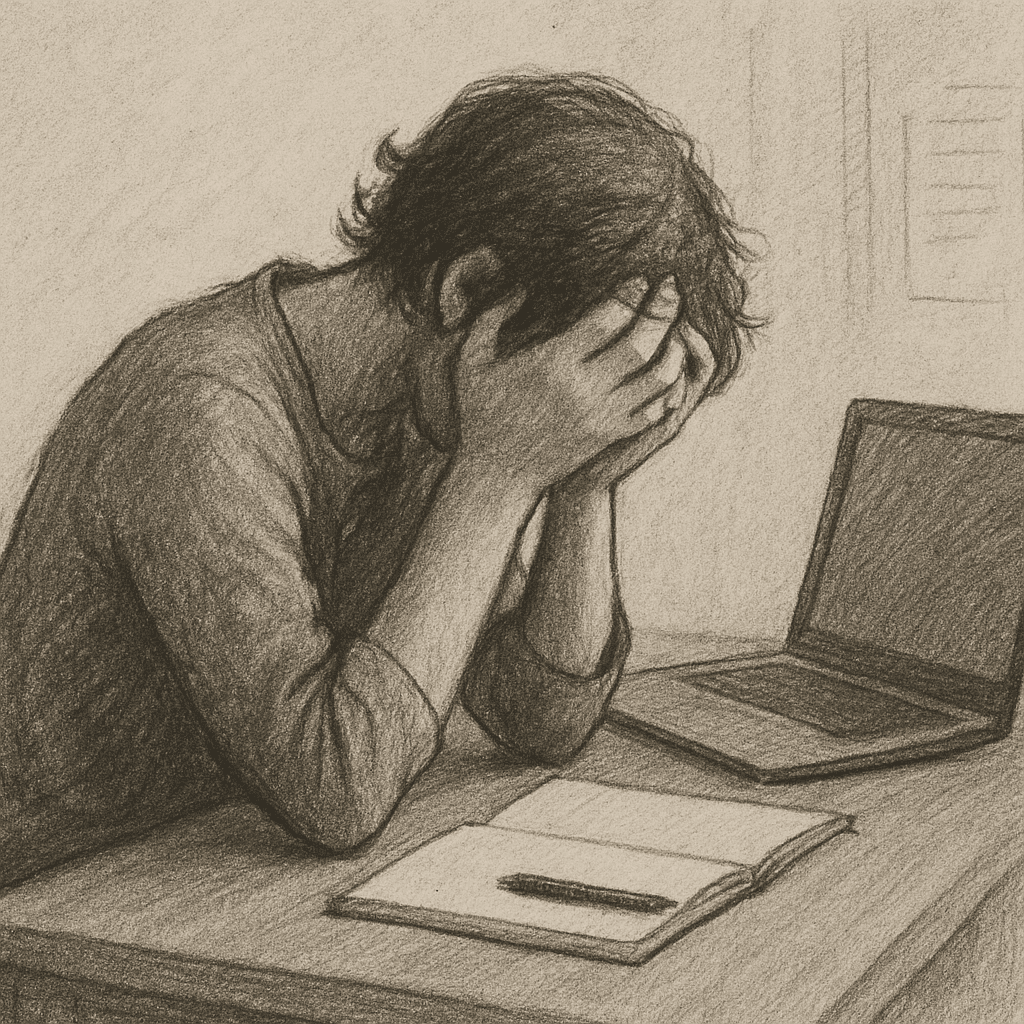
What exactly is burnout syndrome?
The burnout syndrome (English „to burn out“) describes a state of deep emotional, physical, and mental exhaustion. This usually results from prolonged occupational or private overload, where one's own resources are continually depleted without sufficient regeneration.
It is not a weakness, but rather a direct consequence of a chronic imbalance between the demands placed on us (or that we place on ourselves) and our ability to manage them healthily.
Warning Signs: How to recognize emotional exhaustion in time?
One of the biggest problems with an impending collapse is its gradual development. Those affected often don't notice the depletion of their energy reserves until they are already deep in crisis. When asked „How do I recognize emotional exhaustion in time?“However, there are clear answers.
Pay attention to typical Warning signs of mental exhaustion:
- Cynicism and detachment: You experience sudden indifference or even aggression towards colleagues, clients, or tasks that used to bring you joy.
- Performance degradation: Despite enormous effort and overtime, mistakes creep in, concentration wanes.
- Lack of recovery: Even after a weekend or vacation, you continue to feel empty and drained.
Psychosomatic complaints due to chronic stress
Body and mind are inseparably connected. When the soul suffers, the body often speaks. Psychosomatic complaints due to chronic stress are therefore classic accompanying symptoms. These include persistent sleep disorders, tinnitus, dizziness, chronic headaches and back pain, as well as gastrointestinal problems or heart palpitations. The body essentially "pulls the emergency brake" when the mind is not ready to take breaks.
The Gradual Process: Herbert Freudenberger's Phase Model
Burnout never happens overnight. To better understand its progression, psychology has developed various models. The most well-known is the Herbert Freudenberger's Phase Model, a German-American psychoanalyst who significantly coined the term in the 1970s.
His model comprises 12 phases that can transition seamlessly. Here they are summarized into four core stages:
- The idealistic beginning: Exaggerated ambition and the urge to prove oneself and others wrong. Personal needs are put aside for work.
- The beginning exhaustion: Initial chronic fatigue sets in. More energy is invested to keep up with the workload. Conflicts are suppressed.
- Retreat and cynicism: People withdraw socially, become cynical, and become emotionally numb. Alcohol, drugs, or other addictive substances are sometimes used as compensation.
- The Complete Collapse (The Final Stage): Inner emptiness, the feeling of meaninglessness, and complete powerlessness set in. An acute medical emergency has been reached.

Diagnosis and Key Differentiations
If chronic fatigue is suspected, precise diagnostics by specialized personnel are required. Only then can the correct therapy be initiated.
The Maslach Burnout Inventory Test Procedure
In practice, to scientifically measure the severity of exhaustion, the Maslach Burnout Inventory Test Procedure The MBI is used. This psychological questionnaire measures three main dimensions: emotional exhaustion, depersonalization (cynicism/distance from work), and reduced personal accomplishment. The evaluation provides insight into the extent to which the syndrome is already pronounced.
Difference between clinical depression and exhaustion
An essential task for doctors and therapists is differential diagnosis. The Difference between clinical depression and exhaustion is crucial, even though the symptoms often overlap.
- Burn-out is almost always situational in its development (mostly work-related). Energy slowly returns when the stressor is removed.
- A clinical depression In contrast, it is often all-encompassing and affects all areas of life, regardless of the current workload. It is frequently accompanied by a generalized loss of self-esteem and deep feelings of guilt.
Boreout versus overload at the workplace
Interestingly, it's not just too much work that can make you sick. When it comes to the topic of Boreout versus overload at the workplace it becomes clear that a permanent Underachievement and the feeling of meaninglessness at work can lead to the exact same symptoms of exhaustion as burnout. Both extremes – chronic overload and chronic under-stimulation – mean massive stress for the psyche.
The True Causes: Why Do We Burn Out?
The reasons for a breakdown are rarely one-dimensional. It is usually a toxic mix of external circumstances and internal personality structures.
Chronic stress in the workplace: consequences for the organism
The working world has intensified. If Chronic workplace stress consequences which entails permanent alarm readiness, the autonomic nervous system gets out of sync. External factors include:
- Unclear goals and lack of feedback
- Lack of control over one's own tasks
- A toxic work environment or constant fear of job loss
- Constant interruptions and information overload
Perfectionism as a Cause of Mental Overload
Not everyone who works a lot burns out. Often, it's the most dedicated and conscientious employees who are particularly at risk. Perfectionism as a Cause of Mental Overload should never be underestimated. Those who want to accomplish tasks at 150 percent, cannot tolerate mistakes, and primarily define their self-worth through professional achievement, inevitably drive themselves into a spiral of exhaustion.

Prevention: Actively Counteracting in Everyday Life
To prevent this from happening in the first place, active measures are required. There are many proven methods to Sustainably strengthen resilience in everyday professional life to be able to - so mental resilience against stressors.
Improve work-life balance in home office
Ever since the mass shift to working from home, the lines between professional and private life have increasingly blurred. Those who have their laptops on the kitchen table tend to „just quickly“ answer an email in the evening. To Improve work-life balance in home office strict routines can help
- Spatial separation If possible, do not work in the bedroom.
- Fixed working hours: Define clear start and end times for work. Consistently put work equipment out of sight after work.
- Break culture Schedule real breaks where you're not staring at screens. Get some fresh air.
Lowering cortisol levels through relaxation techniques
Chronic stress means our body is continuously releasing the stress hormone cortisol. To counteract this, we need to actively signal to the nervous system that it is safe. You can your Lowering cortisol levels through relaxation techniques how
- Autogenic Training or Progressive Muscle Relaxation (PMR)
- Mindfulness meditation and yoga
- Deep breathing (e.g., the 4-7-8 breathing technique)
Effective Stress Management Strategies
In addition to pure relaxation, methodical approaches are also needed for everyday work. Effective Stress Management Strategies start directly with work organization:
- Prioritization Use methods like the Eisenhower Principle to distinguish between what is important and what is urgent.
- Learning to say no: Recognize your capacity limits and communicate them clearly.
- Digital Detox: Turn off push notifications on your phone and set fixed times to check your email.
The Way Back: Healing and New Beginnings
If preventive measures are no longer effective and exhaustion is already severe, the path out of burnout is a process that requires time, patience, and often external support.
When Professional Help is Necessary for Overwork
Seeking support is not a sign of weakness, but of self-care and strength. However, when professional help is needed for overwork, many wonder. The answer: At the latest, when you can no longer manage your everyday life on your own, when psychosomatic complaints become chronic, or when feelings of deep hopelessness and panic attacks set in.
General practitioners are often the first point of contact. They can check physical condition and refer to psychotherapists, psychiatrists, or specialized clinics. Cognitive behavioral therapy (CBT) has proven particularly effective in treating burnout processes, as it helps to break down dysfunctional thought patterns (such as extreme perfectionism).
Return to work after sick leave
After a long period of absence, returning to the old workplace is often associated with great anxiety. To avoid an immediate relapse, a gradual return is recommended.
The Occupational reintegration after sick leave (often implemented in Germany according to the „Hamburg Model“) allows affected individuals to gradually increase their working hours over weeks or months. During this time, the employee remains officially on sick leave and receives sick pay, thereby minimizing performance pressure. This gentle reintroduction gives the employee the opportunity to test whether their resilience has been restored and whether necessary workplace changes (e.g., task redistribution) are actually effective.

Conclusion: Take your limits seriously
The Burnout syndrome is a compelling wake-up call for body and soul. It painfully shows us that we need to rethink our lifestyle, our thought patterns, and the way we work. Those.
Take care of yourself. Your health and well-being are your most important asset – both professionally and personally.
