
A scratchy throat, a stuffy nose, and a general feeling of weakness – almost all of us know these first, ominous signs. Acute upper respiratory tract infections are among the most common human illnesses. Adults typically experience two to four such infections per year, while children of kindergarten or primary school age can be affected up to ten times annually.
Although these conditions are usually harmless and are independently managed by the immune system, they can significantly impact our daily lives. Sleep disturbances, loss of concentration, work absences, and a greatly reduced quality of life are the direct consequences. In this comprehensive guide, you will learn everything you need to know about acute respiratory infections. We will examine the causes, detail the various clinical pictures, and provide you with well-founded, immediately applicable tips for relief and prevention.

What exactly are acute upper respiratory tract infections?
Medically, the airways are divided into an upper and a lower tract. The upper airways include:
- The nasal cavity
- The paranasal sinuses (frontal sinuses, maxillary sinuses, ethmoid cells, sphenoid sinus)
- The pharynx
- The Larynx
Everything below the vocal cords of the larynx – that is, the trachea, bronchi, and alveoli – makes up the lower respiratory tract. acute respiratory infection The upper region is usually what we colloquially refer to as a „cold“ or „flu-like infection.“ The mucous membranes lining these cavities become inflamed by the penetration of pathogens, swell, and produce increased secretions.
Causes: The Difference Between Viral and Bacterial Infections
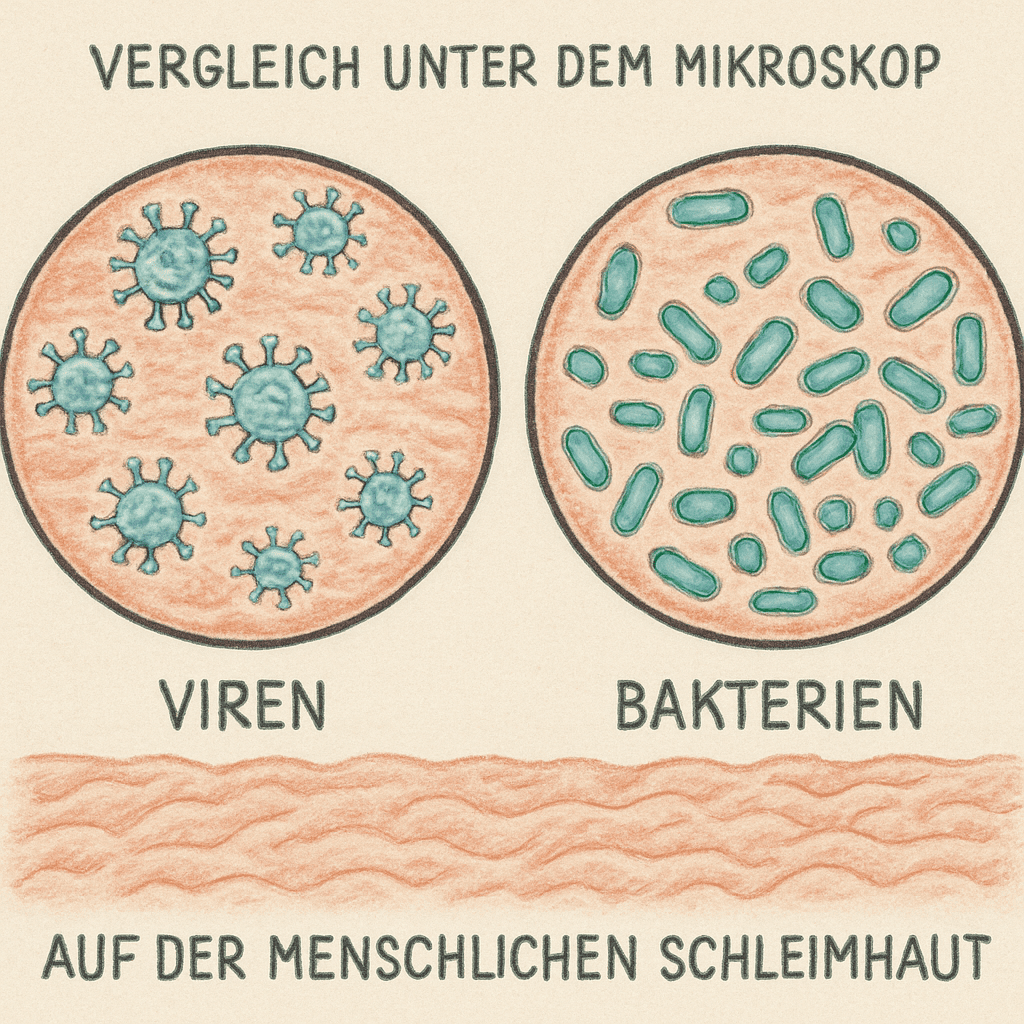
One of the most common questions in a family doctor's practice is: „Do I need an antibiotic?“ The answer in most cases is a clear „no.“ To understand why this is the case, we need to look at the Difference between viral and bacterial infection look closer.
Viral infections
Up to 90 percent of all acute upper respiratory tract infections are caused by viruses. Over 200 different virus types are known, including rhinoviruses, coronaviruses (including the less harmful common cold variants), adenoviruses, and respiratory syncytial virus (RSV).
- Mechanism of action Viruses invade the mucous membrane cells, reprogram them, and force them to produce new viruses until the cell bursts.
- Secret: In viral infections, nasal discharge is usually watery and clear at first.
- Treatment Antibiotics are completely ineffective here. The therapy focuses on alleviating symptoms while the immune system fights the viruses.
Bacterial infections
Bacteria (such as pneumococci, streptococci, or Haemophilus influenzae) are independent living organisms that multiply on mucous membranes outside of our cells.
- Secondary infection Bacterial infections often occur as so-called „superinfections.“ This means: the viruses have already damaged the mucous membranes and weakened the immune system, making it easy for bacteria to additionally settle in.
- Secret: A tough, yellowish or greenish discolored secretion Can be an indication of bacteria, but it is not definitive proof.
- Treatment The use of antibiotics is only sensible and necessary in cases of a proven, severe bacterial infection (e.g., purulent tonsillitis or severe bacterial sinusitis).
Typical respiratory infection symptoms at a glance
The Respiratory infection symptoms are diverse and often develop gradually. A classic cold progresses in phases and changes its character over a period of one to two weeks.
The most common complaints include:
- Scratchy throat and difficulty swallowing Often the very first symptom.
- Sneezing and runny nose The watery secretion is intended to flush pathogens out of the body.
- Stuffy nose The nasal mucous membrane swells significantly.
- Head and limb pain Side effects of immune defense.
- Elevated temperature or slight fever: Especially more common in children than in adults.
- Cough: Usually starts dry and then turns into a productive cough (with phlegm).
Cold vs. Flu Symptoms Checklist
It is crucial to distinguish between a harmless cold and the actual flu (influenza), as the latter has a significantly more severe course and can be dangerous for at-risk groups. This is where Cold vs. Flu Symptoms Checklist:
| Feature | Common Cold | True Flu (Influenza) | | :— | :— | :— | | Onset of illness | Gradual, over days | Sudden, „out of nowhere“ | Fever Rarely, usually only slightly elevated | Often high fever (39°C to 41°C) | | Headache/Limb pain | Mild to Moderate | Severe and Pronounced | | Exhaustion Slight, everyday life often still manageable | Extreme, sudden bedriddenness | Cold Very often | Rather seldom | Sneeze | Frequent | Rare | | Cough Mostly moderate, later with phlegm | Dry, severe, painful cough | | Duration Approx. 7 to 10 days | 1 to 3 weeks (or longer)
The most common diseases of the upper respiratory tract in detail
Acute upper respiratory tract infections can focus on various areas of the tract. Often, the infection begins in one spot and then spreads (the so-called „floor change“).
1. Common cold (Acute rhinitis)
The common cold is the most frequent form of infection. The nasal mucous membrane becomes inflamed. Initially, the nose itches and tingles, followed by sneezing fits and a profuse watery discharge. After a few days, the mucous membrane swells, the nose feels „blocked,“ making breathing, tasting, and smelling difficult. The discharge becomes thicker.
2. Sinusitis: Signs and Progression
If swelling of the nasal mucosa blocks the small passages leading to the sinuses, mucus can no longer drain from them. This creates an ideal breeding ground for pathogens. Anyone who has a Sinusitis signs and progression If you want to correctly identify (sinusitis), you should look for the following symptoms:
- A throbbing, pressure-like pain in the face (cheekbones, forehead, behind the eyes).
- The pain worsens when bending forward (e.g., when stooping or tying shoes).
- Strong feeling of pressure and reduced sense of smell.
- Thick mucus often drips down the throat (postnasal drip syndrome), leading to severe coughing fits at night.
The course of acute sinusitis usually lasts two to four weeks. If it is not properly healed, it can become chronic.

3. Pharyngitis: Treating inflammation of the throat lining
The medical term for sore throat is pharyngitis. The throat is very red, swollen, and hurts with every swallow. It often feels like you have a lump in your throat or like you're swallowing razor blades. Would you like a Treat inflammation of the pharyngeal mucosa, The primary focus is on moistening the mucous membranes. Lozenges that create a protective film over the mucous membranes, or mild anesthetic agents from the pharmacy, can provide relief.
4. Laryngitis (Acute Laryngitis)
If the infection continues downward, it reaches the larynx. The main symptom here is hoarseness to complete loss of voice, accompanied by a harsh, dry cough. Most important rule here: Absolute voice rest! Even whispering is forbidden, as it paradoxically strains and irritates the vocal cords even more than normal speaking.
Delimitation and Transition: Acute Bronchitis
Strictly speaking, it belongs to acute bronchitis to the infections of lower Airways. In practice, however, it is difficult to distinguish from upper respiratory infections. Why? Because most colds begin in the upper airways and then the pathogens „descend“ into the lower airways.
In acute bronchitis, the lining of the bronchi (the branches of the trachea) becomes inflamed. The main symptom is a cough, which often causes a painful burning sensation behind the breastbone. To Estimating the duration of acute bronchitis To recover, you need patience: While a cold usually disappears after a week, the cough lingers stubbornly. Doctors say that uncomplicated coughs from acute bronchitis can last three to even eight weeks until the mucous membranes have fully healed. However, if the cough lasts longer than eight weeks or is accompanied by shortness of breath, it is essential to see a doctor.
Conventional Medicine and Pharmacy: Relieving Symptoms of the Flu-like Infection
Since we are usually unable to fight the viruses directly, the treatment aims to Relieve symptoms of a cold, so that the body has the necessary rest for self-healing.
Taking painkillers correctly for a cold
Headaches, body aches, and fever can be extremely unpleasant. Over-the-counter analgesics (pain relievers) and antipyretics (fever reducers) can help here.
- Ibuprofen: It has pain-relieving, fever-reducing, and additionally anti-inflammatory effects. It is often the drug of choice for inflamed airways.
- Paracetamol It works well against pain and fever, but is not anti-inflammatory. It is particularly gentle on the stomach.
- Acetylsalicylic acid (ASA): Acts similarly to ibuprofen, but should not be given to children and adolescents under 12 years of age for febrile illnesses due to the risk of Reye's syndrome.
Who Taking painkillers correctly for a cold You must absolutely follow the package insert. More is not always better! The maximum daily dose must not be exceeded to avoid damaging the liver (with paracetamol) or kidneys and stomach (with ibuprofen/aspirin). Only take the medication for as long as necessary, ideally no longer than three to four days without medical advice.
Decongestant nasal sprays
They are a godsend for a stuffy nose and important for ensuring sinus ventilation (prevention of sinusitis). Active ingredients such as xylometazoline or oxymetazoline constrict the blood vessels in the mucous membrane.
- Caution Use decongestant sprays for a maximum of five to seven days! Otherwise, there is a risk of the so-called „rebound effect“ (Privinism), where the mucous membrane permanently swells without the spray, leading to dependence.
The Power of Nature: Herbal Expectorant Action and Application
Phytotherapy (herbal medicine) plays a prominent role in respiratory infections. Unlike many chemical cough suppressants, plant extracts support the natural healing process of the mucous membranes. Those who opt for Herbal expectorant action and application interested, finds highly effective preparations in the pharmacy.
- Ivy and thyme extracts: They have proven to be true wonders for productive coughs. They have a secretolytic (mucus-dissolving) and bronchospasmolytic (bronchial muscle-relaxing) effect. They noticeably ease expectoration.
- Cineole and Myrtol: These essential oils (derived from eucalyptus, sweet orange, myrtle, and lemon) are often taken in capsule form. They travel through the bloodstream to the finest branches of the lungs and sinuses, where they liquefy mucus and promote its removal by the cilia.
- Pelargonium sidoides (Cape Pelargonium): An extract from the root of this South African plant not only has expectorant properties but also mild antiviral and antibacterial effects, and can significantly shorten the duration of illness.
- primrose root Often used in combination with thyme, it stimulates the production of thin mucus.

Proven home remedies for sore throat and cough
In addition to over-the-counter medications, the traditional home medicine cabinet has proven itself over generations. Home remedies for sore throat and cough are gentle, cost-effective, and highly effective when used correctly.
Adequate hydration
It may sound trivial, but it's the most important measure: Drink plenty! Two to three liters of water or unsweetened herbal teas a day are essential. The fluid is necessary for the body to be able to produce thin mucus at all. Anyone who drinks too little will have mucus that remains thick and cannot be blown out or coughed up.
Tea Variations
- Sage tea Gargling with lukewarm sage tea disinfects the throat and relieves inflammation.
- Ginger tea with lemon: Ginger contains gingerols, which have anti-inflammatory and mild pain-relieving effects. Lemon provides vitamin C. Important: Only add the lemon to the tea once it has cooled down a bit, as vitamin C is sensitive to heat.
- Onion juice The classic remedy for a cough. Dice an onion, pour honey or sugar over it, and let it steep overnight. The resulting syrup contains essential oils from the onion that have antibacterial and strong expectorant properties. A spoonful three times a day often works wonders.
Natural help for dry, irritating cough
A dry, irritating cough (without phlegm production) is agonizing, especially at night. Different mechanisms are at play here than with a phlegmy cough. Natural help for dry, irritating cough aims to soothe irritated cough receptors in the throat.
- Honey Scientific studies have shown that a spoonful of honey before bedtime often relieves children's nighttime cough more effectively than over-the-counter cough suppressants. (Caution: Do not give honey to children under one year of age due to the risk of infant botulism!).
- Icelandic moss and marshmallow root: These plants contain valuable mucilaginous substances. Taken as lozenges or as tea (prepared as a cold maceration), they form a gentle, gel-like protective film over the irritated throat lining, thus suppressing the cough reflex.
Correct Inhalation with a Stuffy Nose
Inhalation moistens the airways and loosens deep-seated mucus. But what's the best way to do it? Who Proper inhalation for a stuffy nose wants, has two options:
- Classic steam inhalation: A bowl with hot (not boiling!) water, a towel over your head.
- Advantage Heat promotes blood circulation.
- Additives Chamomile flowers calm, and essential oils (peppermint, eucalyptus) clear the nose, feeling immediate.
- Disadvantage The water vapor only reaches the upper respiratory tract (nose and throat); the droplets are too large to penetrate the sinuses or bronchi. Not suitable for babies and toddlers due to the risk of scalding! Ethereal oils are taboo for asthma sufferers (risk of bronchospasm).
- Inhalation with nebulizers (e.g., Pari Boy):
- Advantage These devices atomize an isotonic saline solution (0.91% NaCl) into droplets so fine that they can penetrate deep into the bronchi and sinuses.
- Application Highly effective for moistening and liquefying tough mucus. Safe for all ages.

When to see a doctor for cold symptoms? The warning signs
As a general rule, acute upper respiratory tract infections heal on their own within one to two weeks. Nevertheless, there are situations where professional medical help is absolutely necessary. But When to see a doctor for cold symptomsWatch out for these „red flags“:
- Shortness of breath or difficulty breathing An absolute warning sign that requires immediate medical attention (danger of pneumonia or a severe asthma attack).
- Persistent high fever Fever over 39°C (102.2°F) that doesn't respond to antipyretics or lasts longer than three days.
- Recurrent fever If you were already feeling better and suddenly developed a high fever and strong symptoms of illness again after a few days (indicating a bacterial superinfection or pneumonia).
- Severe pain Specifically, severe ear pain, one-sided facial pain (sinuses), or chest pain when breathing.
- Duration of symptoms: If there is absolutely no improvement in sight after 7 to 10 days, or if the symptoms steadily worsen.
- Risk groups Pregnant women, infants, the elderly, and individuals with chronic illnesses (asthma, COPD, diabetes, immunodeficiency) should consult a doctor earlier.
Prevention: How to lower your risk of infection from respiratory illnesses
The best respiratory infection is, of course, one you never get. However, especially during the cold, wet season, it seems impossible to escape viruses. With a few targeted behavioral measures, you can, however, minimize your personal Reduce the risk of infection from respiratory illnesses.
- Hand hygiene is paramount. Most viruses are transmitted through contact infections. Someone sneezes into their hand, touches a doorknob, you touch the knob, and then unconsciously rub your nose or eyes. It's happened. Regular and thorough hand washing (at least 20 to 30 seconds with soap) is the best protection.
- Keep your distance Droplets expelled when sneezing, coughing, or speaking generally do not travel further than 1.5 to 2 meters. Keep your distance from obviously ill individuals.
- Proper Ventilation: In closed, heated rooms, viruses (aerosols) quickly accumulate. Additionally, the heated air dries out the mucous membranes, which weakens their protective function. Intensive ventilation The solution is: Open the windows wide for 5 to 10 minutes every two hours (create a draft). A permanently tilted window barely exchanges air but cools the walls.
- Cough and sneeze etiquette: Don't sneeze into your hand. Instead, sneeze into the crook of your arm or into a disposable tissue, which you should then dispose of immediately.
- Wear masks: Wearing a medical or FFP2 mask in crowded indoor spaces (such as public transport) significantly reduces the risk of droplet infection – both for yourself and for others, in case you are already infected.
Long-Term Protection: Tips to Strengthen Your Immune System for Winter
Our immune system is a highly complex network of cells, proteins, and organs that works around the clock. To prepare it optimally for cold and flu season, a holistic approach is needed. Let's take a look at the most effective Strengthen your immune system: Tips for winter.
1. The right nutrition and micronutrients
A balanced diet provides the body with the building blocks for strong defenses. Particularly in focus are:
- Vitamin C: The classic. It is involved in countless immune processes. Abundant in bell peppers, broccoli, citrus fruits, sea buckthorn, and rose hips.
- Vitamin D: The „sun vitamin“ controls the activity of T-cells (the „police“ of our immune system). Since the sun is not strong enough in our latitudes during winter, many people suffer from a deficiency. Checking your vitamin D levels with your doctor and supplementing accordingly during the dark months is highly recommended.
- Zinc An essential trace element that makes it difficult for viruses to dock onto mucous membrane cells. Found in oatmeal, lentils, beef, and pumpkin seeds.
2. Sleep and Regeneration
The body heals itself during sleep. During deep sleep phases, the organism releases immune-active substances and forms new defense cells. Chronic sleep deprivation (less than six hours per night) massively increases the risk of upper respiratory infections. Aim for seven to eight hours of high-quality sleep per night.
3. Stress Management
It is scientifically proven: Chronic psychological stress makes you sick. The stress hormone cortisol suppresses the immune response. Those who are constantly under pressure practically attract infections. Regular relaxation techniques (meditation, yoga, autogenic training) or simply a walk in the woods can significantly lower cortisol levels.
4. Hardening: Kneipp and Sauna
The switch between cold and warm trains the blood vessels in the mucous membranes. When you go from the cold into the warmth (or vice-versa), the vessels have to quickly expand or contract.
- Saunas Regular sauna visits (once or twice a week) are proven to strengthen the immune system.
- Contrast showers End your morning shower with a cold blast. Start at your feet and work your way towards your heart. This strengthens you and makes you more alert.
Prevention of recurrent infections
Some people seem to catch one cold after another. Prevention of recurrent infections often requires deeper root cause analysis.
- Intestinal rehabilitation Did you know that about 70 to 80 percent of all immune cells are located in the gut? A healthy gut flora is essential for a functioning immune system. After antibiotic therapy or with a very one-sided diet, the microbiome can be disrupted. Prebiotic and probiotic foods (like natural yogurt, kefir, sauerkraut, fiber) or special treatments from the pharmacy can help rebuild the gut flora.
- Let it heal One of the main reasons for recurrent infections is that the previous infection was not properly cured. Those who return to sports too soon or go to work stressed not only risk relapses but also endanger the heart muscle in the long run (risk of myocarditis).
- Quitting Smoking Smoking paralyzes the cilia in the airways, which are responsible for transporting mucus and pathogens. Smokers therefore have a significantly higher risk of frequent and severe respiratory infections. Quitting nicotine is one of the best measures for healthy airways.
Conclusion: Well-prepared for the cold season
Acute upper respiratory infections are annoying, but in most cases, they are a natural response of the body to fend off invaders. A good understanding of Respiratory tract infection symptoms helps you to react correctly. Always think of the Difference between viral and bacterial infection – Antibiotics are useless for the common cold.
Instead, you should focus on rest, plenty of fluids, and targeted relief. Whether you Taking painkillers correctly for a cold, on Home remedies for sore throat and cough trust or herbal expectorants insert – You have many options for gently supporting your body. Learn to Estimating the duration of acute bronchitis and be patient with yourself.
With the right prevention strategies, conscious hand hygiene, and a strong immune system, you can enjoy the cold season with significantly fewer complaints. Listen to your body, allow yourself the necessary rest if you do get sick, and don't hesitate to see a doctor if warning signs appear. This is how you stay safe and healthy.
