
When pain becomes unbearable or a high fever simply won't subside, doctors often reach for a tried-and-true remedy: Novalgin. The active ingredient contained within, metamizole (also known internationally as dipyrone), has been a staple of pain therapy for decades. But how exactly does this medication work, when is it the best choice, and what risks does it entail?
In this article, we take a detailed look at the mechanism of action, areas of application, and safety of this strong pain reliever.
How does Novalgin work in the body?
Novalgin is distinguished by a triple action that sets it apart from many other painkillers. In the medical community, it is often considered highly effective non-opioid analgesic for severe pain (Non-opioid painkillers for severe pain) is described. It acts directly on the central nervous system and blocks the transmission of pain signals there.
Additionally, the active ingredient metamizole possesses excellent antispasmodic properties for stomach cramps (antispasmodic properties for stomach and intestinal cramps). It relaxes the smooth muscles of the internal organs, making it indispensable, especially for colicky complaints.

The main application areas
Doctors do not prescribe the medication for mild headaches, but specifically for moderate to severe ailments. Typical applications include:
- Relief from colic: To relieving acute renal colic pain (Relief of acute renal colic pain) or for biliary colic, Novalgin is considered the gold standard, as it relieves pain and simultaneously resolves spasms.
- Postoperative pain It is excellent for Managing post-operative pain at home (the management of postoperative pain at home) when patients are discharged after surgery.
- Fever reduction Another important area is treating high fever resistant to paracetamol (Treatment of high fever unresponsive to acetaminophen or ibuprofen).
Metamizole vs. Ibuprofen: What's the difference?
Patients often wonder which medication is better suited. In international research, this topic is often discussed under the term Dipyrone vs. ibuprofen for inflammation Metamizole versus Ibuprofen for inflammation.
The essential difference lies in the anti-inflammatory effect:
- Ibuprofen is a so-called NSAID (Non-Steroidal Anti-Inflammatory Drug). It effectively relieves pain and inhibits inflammation, making it ideal for joint pain or sports injuries.
- Novalgin (Metamizole) has almost none anti-inflammatory effect. Its strengths lie in extremely strong pain relief, fever reduction, and antispasmodic effects. For purely pain caused by inflammation, ibuprofen is therefore often the better choice, while Novalgin excels in cases of cramps or extreme pain peaks.
Dosage forms and onset of action
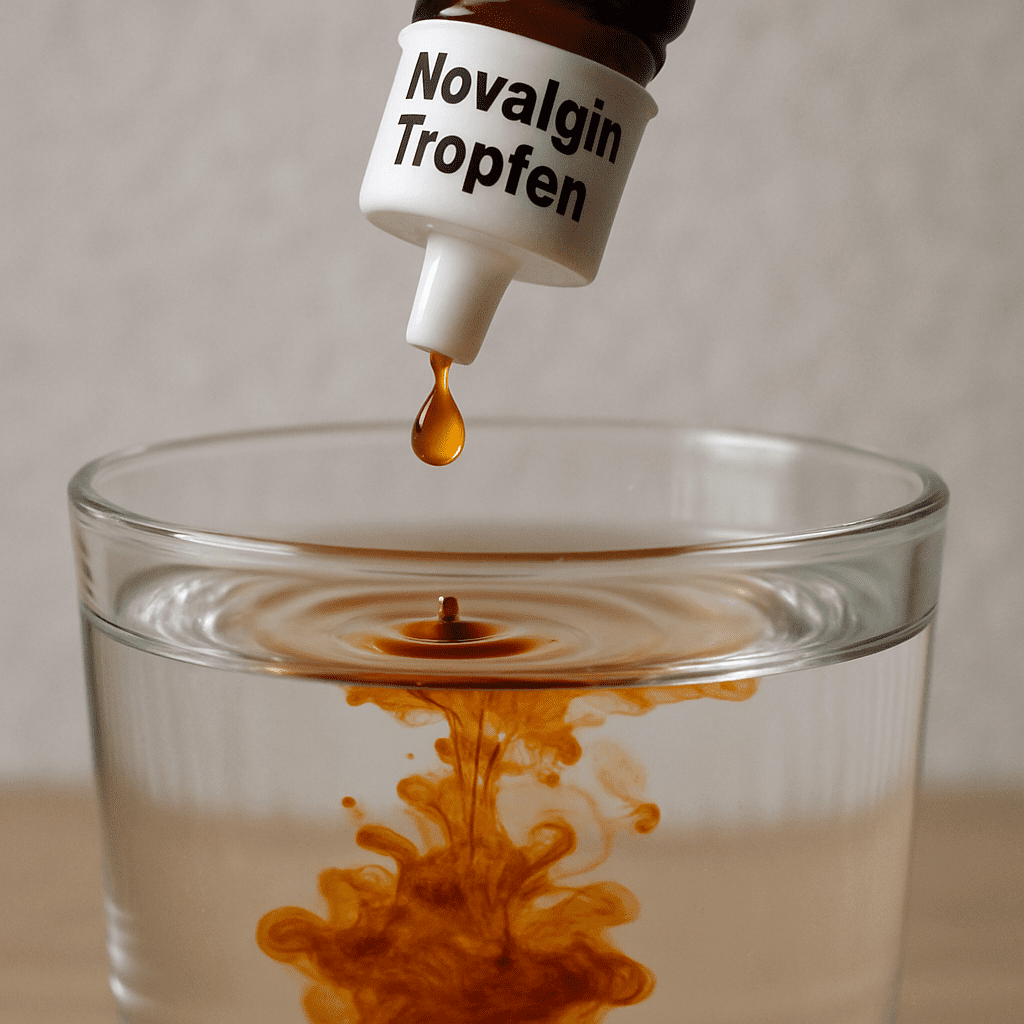
The medication is available in various forms, including tablets, suppositories, and injections. However, the drops are particularly popular. The question often arises in forums and consultations: „Pain relief drops typically start working within 30 minutes to an hour after taking them. However, the exact time can vary depending on the specific medication, the dose, and the individual's metabolism.?“ How long do pain relief drops take to work?.
As Fast-acting liquid pain medication (fast-acting liquid pain reliever) Novalgin is rapidly absorbed through the gastric mucosa.
- Drops The effect usually sets in after 20 to 30 minutes.
- Tablets It takes about 30 to 60 minutes here.
- Injection (intravenous): The effect is almost instantaneous (only under medical supervision).
Dosage and application safety
Taking such a potent medication requires caution. To minimize risks, it is imperative to The safe dosage for pyrazolone derivatives can vary significantly depending on the specific compound, its intended use (e.g., medication for pain, inflammation, or analytical reagent), the patient's age, weight, and overall health, and the route of administration. **It is crucial to consult with a qualified healthcare professional or refer to official drug information resources for specific dosage guidelines.** However, I can provide some general information regarding pyrazolone derivatives and factors that influence their dosage: **General Considerations:** * **Specific Compound:** Pyrazolone is a chemical structure that forms the basis for several drugs. Examples include: * **Metamizole (Dipyrone):** Used as an analgesic and antipyretic in many countries, but has been withdrawn in some due to potential side effects. * **Phenazone (Antipyrine):** An older analgesic and antipyretic, now less commonly used. * **Propyphenazone:** Often used in combination with other analgesics. * **Aminophenazone (Amidopyrine):** Largely withdrawn due to concerns about agranulocytosis. * **Therapeutic Index:** The safe dosage range for any drug is determined by its therapeutic index – the ratio between the toxic dose and the therapeutic dose. Drugs with a narrow therapeutic index require very careful dosing. * **Route of Administration:** Dosages can differ significantly between oral, intravenous, intramuscular, or topical applications. * **Patient Factors:** * **Age:** Dosages for children are often lower and calculated based on weight. Elderly patients may also require dose adjustments due to changes in metabolism and excretion. * **Renal and Hepatic Function:** Impaired kidney or liver function can affect the body's ability to metabolize and eliminate the drug, potentially leading to accumulation and increased risk of toxicity. Doses may need to be reduced. * **Other Medications:** Interactions with other drugs can alter the effectiveness or increase the toxicity of pyrazolone derivatives. * **Potential Side Effects:** Pyrazolone derivatives, particularly some older ones, are associated with serious side effects like: * **Agranulocytosis:** A severe and potentially life-threatening reduction in white blood cells. This is a significant concern with some pyrazolones. * **Allergic Reactions:** Ranging from mild skin rashes to severe anaphylaxis. * **Gastrointestinal Upset:** Nausea, vomiting, stomach pain. **Where to Find Safe Dosage Information:** * **Prescribing Information/Package Insert:** For any specific pyrazolone derivative prescribed as medication, the official prescribing information provided by the manufacturer is the primary source for dosage, contraindications, and warnings. * **Healthcare Professionals:** Always consult your doctor, pharmacist, or other healthcare provider. They can assess your individual needs and prescribe the appropriate dose. * **Pharmacopoeias:** Official pharmacopoeias (e.g., USP, EP) provide monographs for various drugs, including dosage recommendations and quality standards. * **Medical Databases:** Online medical resources and databases (e.g., UpToDate, Micromedex, Lexicomp) offer detailed drug information, including dosing. **In summary, there is no single "safe dosage" for "pyrazolone derivatives." It is essential to obtain this information from reliable medical sources and under the guidance of a healthcare professional for the specific pyrazolone compound being considered.** (safe dosage for pyrazolone derivatives – the group of substances to which metamizole belongs) must be observed. This always depends on the patient's body weight, age, and health status.
Is metamizole safe for seniors?
Relatives often ask doctors: „Metamizole's safety in elderly patients is a concern due to potential increased risk of adverse drug reactions and pharmacokinetic changes with age. However, it can be used cautiously in elderly patients, particularly for short-term pain management, when other analgesics are not suitable or effective. **Key Considerations:** * **Dosage Adjustment:** Lower starting doses and slower titration are recommended. * **Renal and Hepatic Function:** Elderly patients may have reduced kidney and liver function, which can affect drug metabolism and excretion. Metamizole should be used with caution in individuals with impaired renal or hepatic function. * **Drug Interactions:** Elderly patients often take multiple medications, increasing the risk of drug interactions with metamizole. A thorough review of all current medications is essential. * **Adverse Effects:** The risk of side effects such as agranulocytosis, hypersensitivity reactions, hypotension, and gastrointestinal issues may be higher in the elderly. Close monitoring for these adverse effects is crucial. * **Underlying Conditions:** Pre-existing medical conditions in the elderly, such as cardiovascular disease or cognitive impairment, can influence the choice and safety of metamizole. **Recommendations:** * **Consultation with a Doctor:** It is imperative to consult with a healthcare professional before administering metamizole to an elderly patient. They can assess individual risks and benefits, determine the appropriate dosage, and monitor for adverse reactions. * **Lowest Effective Dose:** Use the lowest effective dose for the shortest possible duration. * **Close Monitoring:** Elderly patients receiving metamizole should be closely monitored for efficacy and potential side effects. While metamizole can be a useful option for pain management in some elderly patients, its use requires careful consideration, individual assessment, and close medical supervision.“ (Is metamizole safe for older patients?). Basically, yes. For many seniors who cannot tolerate opioids or NSAIDs (like ibuprofen) due to kidney or stomach problems, metamizole is a very good alternative. However, older people's bodies break down medications more slowly, which is why the dose often needs to be adjusted (reduced).
Use in veterinary medicine
Not only humans benefit from its pain-relieving effect. Veterinarians frequently prescribe the medication for dogs experiencing severe gastrointestinal pain or spasms. The correct Novalgin Dog Dosage This is essential and must never be derived from human medications on your own. A veterinarian calculates the exact number of drops or tablets based on the dog's exact weight, as overdoses in animals can lead to severe organ damage.
Novalgin Side Effects and Important Risks
Although Novalgin is usually well tolerated when used correctly, there are risks you should be aware of. If patients, after Novalgin side effects or internationally to Metamizole sodium side effects When searching, they often encounter warnings about blood count and circulation.
Agranulocytosis (A rare but serious danger)
The most feared side effect is agranulocytosis, a life-threatening drop in a specific type of white blood cell. It is vital to monitor the Common symptoms of agranulocytosis from medication include: * **Fever** * **Sore throat** * **Mouth sores** * **Chills** * **Fatigue** * **Weakness** * **Infections that don't heal or that keep recurring** * **Skin infections** Less common symptoms can include: * **Shortness of breath** * **Diarrhea** * **Painful urination** (Know the symptoms of drug-induced agranulocytosis)
- Sudden, high fever (despite taking the medication)
- Chills
- Sore throat and difficulty swallowing
- Inflammation in the oral cavity, nasal cavity, or pharynx
If these symptoms occur, the medication immediately discontinued and a doctor should be consulted! For long-term therapy, doctors routinely prescribe a White blood cell count monitoring during treatment (Monitoring white blood cell count during treatment) to detect changes in the blood count early.
2. Allergic reactions and blood pressure drop
As with all medications, one must pay attention to allergic reactions to pain medications (allergic reactions to painkillers). This can range from mild rash to shortness of breath or anaphylactic shock. A significant drop in blood pressure can also occur, especially with rapid intravenous administration.

Contraindications: Who should not take the medication?
Strict rules apply Contraindications for non-narcotic pain relievers (Contraindications for non-narcotic analgesics) of this class. Novalgin must not be taken in case of:
- Known allergy to pyrazolones
- Existing disorders of bone marrow function or blood formation
- In the last trimester of pregnancy
- In infants under 3 months of age or weighing less than 5 kg
Conclusion: A potent remedy with a clear indication
Novalgin is not a medication for everyday tension headaches. It is a highly potent pain and fever reliever that provides valuable service when strictly indicated and under medical supervision – be it for painful kidney stones, extreme fever, or after surgery.
If you follow your doctor's instructions, pay attention to the correct dosage, and take the body's potential warning signs seriously (such as a sore throat or sudden fever), metamizole is a safe and extremely effective ally in the fight against severe pain.
Note: This article does not replace medical advice. If you have questions about taking it, potential side effects, or interactions with other medications, please always consult your doctor or pharmacist.
