
Stress gilt oft als einziger Auslöser – tatsächlich wirken meist mehrere Faktoren zusammen. Ein steifer Nacken vom langen Sitzen, zu wenig Trinken und Hektik können sich gegenseitig verstärken, bis der Schmerz einsetzt.
Wer erkennt, welche Faktoren bei sich persönlich eine Rolle spielen, kann gezielter gegensteuern – sowohl akut als auch vorbeugend.
Migräne oder Spannungskopfschmerz?
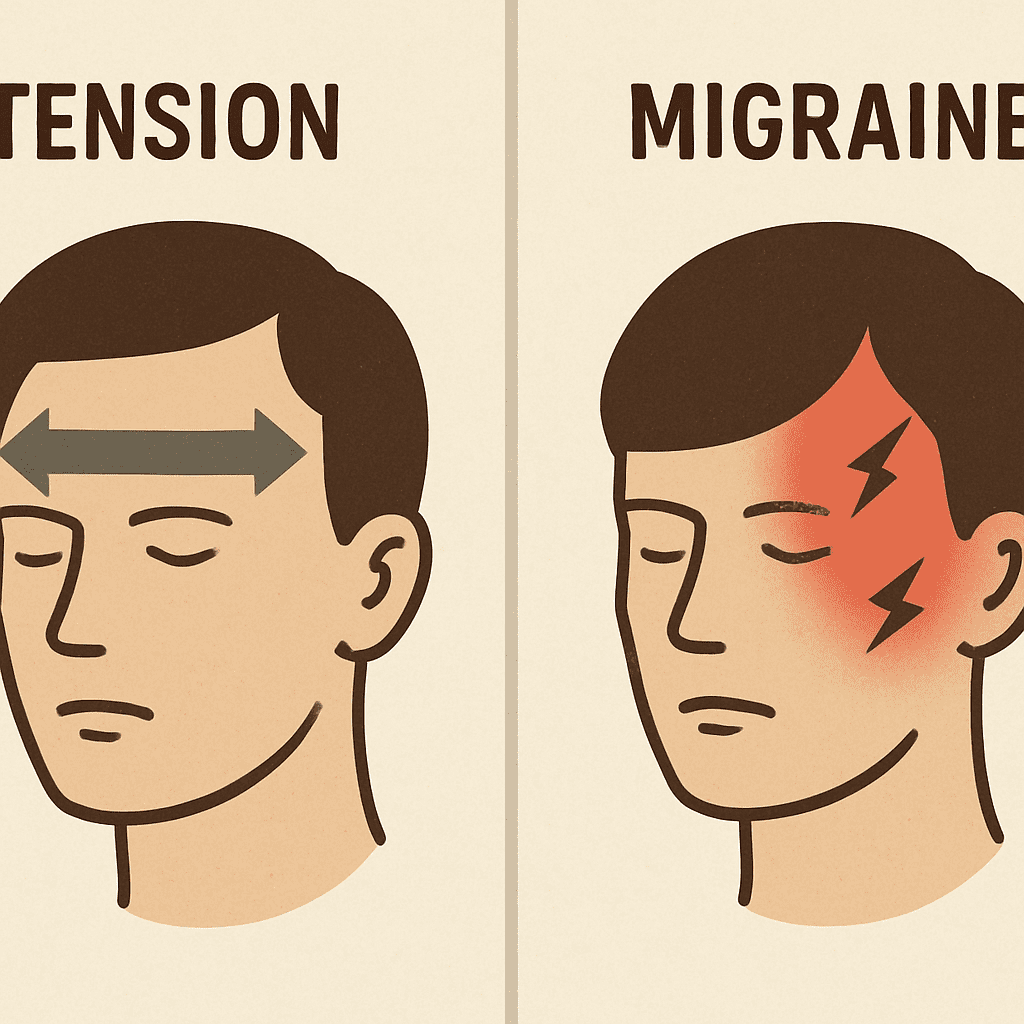
Spannungskopfschmerzen äußern sich meist als beidseitiger, gleichmäßiger Druck – ähnlich einem zu engen Hut. Anders als bei Migräne treten keine Aura-Symptome wie Sehstörungen oder Lichtblitze auf.
- Location of pain Bilateral, band-like pressure (tension) vs. unilateral throbbing (migraine).
- Type of pain: Dull and oppressive vs. throbbing and stabbing.
- Activity Leichte Bewegung lindert Spannungskopfschmerzen oft, während sie eine Migräne in der Regel verschlimmert.
Spannungskopfschmerzen vergehen meist nach einigen Stunden oder Tagen von selbst. Bei plötzlichen, sehr starken Schmerzen oder Begleitsymptomen wie Fieber ist ein Arztbesuch sinnvoll.
Vom Nacken bis zur Schläfe: Fehlhaltungen und Triggerpunkte
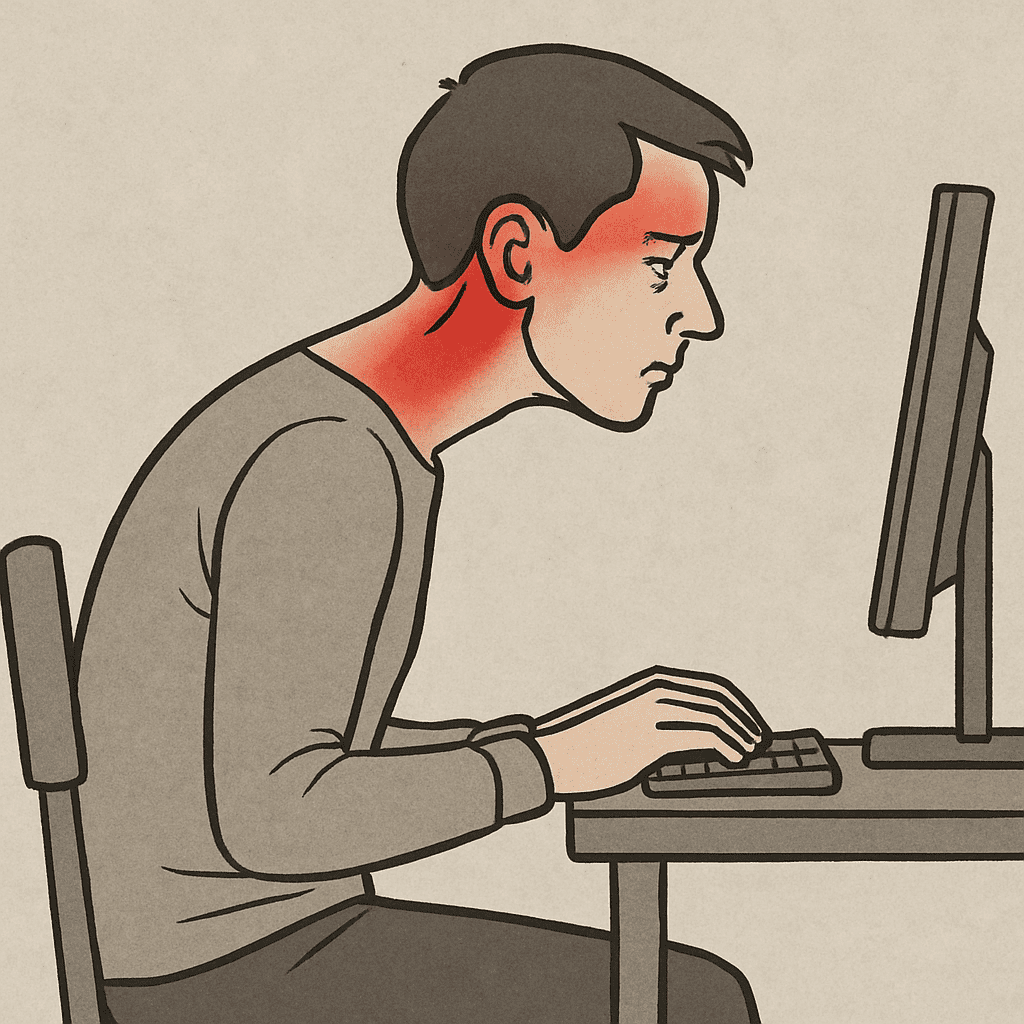
Nach Stunden am Schreibtisch wandert der Kopf oft unbemerkt Richtung Bildschirm. Diese Haltung belastet die Nackenmuskulatur dauerhaft. Der Schmerz entsteht nicht im Kopf selbst, sondern strahlt vom Nacken in die Schläfen aus.
Überlastete Muskeln bilden dabei verhärtete Knoten, sogenannte Triggerpunkte, die Schmerzen in andere Kopfbereiche ausstrahlen können. Eine bessere Ergonomie am Arbeitsplatz hilft, diesen Zustand zu vermeiden.
Auch nächtliches Zähneknirschen (Bruxismus) kann Kopfschmerzen am Morgen verursachen, da die Kiefermuskulatur anatomisch mit Nacken und Kopf verbunden ist. Gezielte Übungen zum Lösen von Nackenverspannungen können hier einen ersten Unterschied machen.
Der Kopfschmerz ist letztlich ein Zeichen, dass die Muskulatur eine Pause braucht. Verhärtete Triggerpunkte im Schulter- und Nackenbereich gezielt zu behandeln, setzt direkt an der Ursache an.
Soforthilfe ohne Pillen: Pfefferminzöl und Wärme
Wer nicht sofort zur Tablette greifen möchte, kann auf einfache Hausmittel zurückgreifen. Pfefferminzöl enthält Menthol, das bestimmte Schmerzrezeptoren in der Haut kühlt und die Schmerzwahrnehmung dämpfen kann. Wärme im Nacken hingegen fördert die Durchblutung und entspannt verkrampfte Muskeln.
- Cooling Zehnprozentiges Pfefferminzöl auf die Stirn auftragen und leicht einmassieren – Abstand zu den Augen halten.
- Warmth Ein warmes Kirschkernkissen für etwa fünfzehn Minuten in den Nacken legen.
- Massage Sanft kreisende Bewegungen mit den Zeigefingern auf den Schläfen für zwei Minuten.
Wenn diese Maßnahmen nicht ausreichen, stellt sich die Frage nach Schmerzmitteln – und deren Risiken.
Ibuprofen oder Paracetamol? Risiko des Schmerzmittelübergebrauchs
Ibuprofen wirkt zusätzlich entzündungshemmend und kann besonders bei muskelbedingten Kopfschmerzen helfen. Paracetamol ist magenverträglicher. Beide Mittel können jedoch ein Problem verursachen, wenn sie zu häufig eingenommen werden.
Wer regelmäßig Schmerzmittel nimmt, riskiert einen sogenannten medikamenteninduzierten Kopfschmerz: Das Medikament löst dann selbst den nächsten Anfall aus. Neurologen empfehlen deshalb, Schmerzmittel an nicht mehr als zehn Tagen im Monat einzunehmen.
Ein häufig übersehener Faktor ist Magnesiummangel, da Magnesium zur Muskelentspannung beiträgt und das Nervensystem beruhigt. Regelmäßige Bewegung bleibt darüber hinaus eine der wirksamsten Vorbeugemaßnahmen.
Drei Übungen gegen Nackenverspannungen im Arbeitsalltag
Wer lange am Bildschirm sitzt, sollte regelmäßige kurze Bewegungspausen einbauen. Schon 30 Sekunden reichen, um die Körperhaltung zu korrigieren und die Nackenmuskulatur zu entlasten.
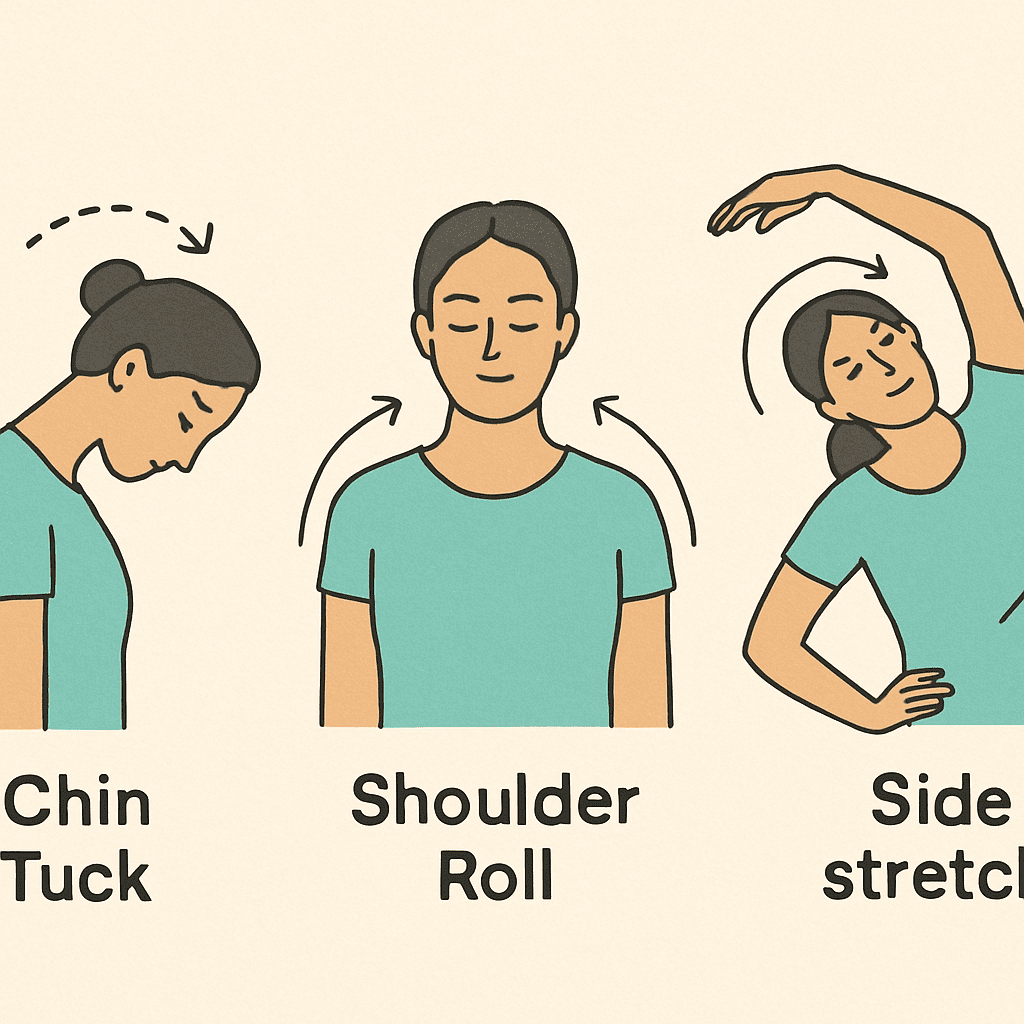
Diese drei Übungen lassen sich einfach am Schreibtisch durchführen:
- The Chin Tuck: Kinn waagerecht nach hinten schieben und die Spannung kurz halten.
- Scapular push-up Schultern nach hinten und unten rollen, als würde man die Schulterblätter zusammendrücken.
- The lateral stretch: Rechtes Ohr sanft zur rechten Schulter neigen, bis die linke Halsseite leicht zieht. 15 Sekunden halten, dann Seite wechseln.
Progressive Muskelentspannung nach Jacobson
Wenn Dehnpausen nicht ausreichen, kann die Progressive Muskelentspannung nach Jacobson helfen. Das Prinzip ist einfach: Muskelgruppen werden kurz angespannt und dann bewusst locker gelassen. Durch diesen Wechsel lernt der Körper, den Unterschied zwischen Anspannung und Entspannung wieder wahrzunehmen.
Wenn die Muskelspannung abfällt, gibt das dem Nervensystem das Signal, dass keine akute Belastung mehr besteht. Stresshormone sinken, die Nackenmuskulatur entspannt sich. Regelmäßig angewendet kann die Methode dazu beitragen, einen chronischen Schmerzkreislauf zu unterbrechen.
Besonders abends ist die Übung sinnvoll – vor dem Einschlafen kann sie die Grundspannung abbauen, die Schlafqualität verbessern und das Risiko für morgendliche Kopfschmerzen verringern.
Kleine Schritte zur Vorbeugung
Wer seine typischen Auslöser kennt, kann früh gegensteuern. Eine einfache tägliche Routine kann helfen, den Druck zu reduzieren:
- Drink enough water Morgens ein Glas Wasser vor dem Kaffee.
- Posture Control Schultern aktiv nach unten und von den Ohren weg halten.
- 5-Minute Stretch Nacken in Bildschirmpausen sanft von Seite zu Seite neigen.
- Magnesium: Zum Beispiel eine Handvoll Mandeln als magnesiumreicher Snack.
- Stress relief Bewusste Bauchatmung am Schreibtisch.
Ein kurzes Kopfschmerztagebuch kann helfen, Muster zu erkennen und herauszufinden, welche Gewohnheiten Beschwerden begünstigen.
Quellen
