You finished yesterday's training like a hero, but this morning you're waddling down the stairs like a penguin - and science warns that tomorrow will likely be even more uncomfortable. This delayed suffering is known in sports medicine as DOMS (Delayed Onset Muscle Soreness) and is by no means a training error, but rather the starting signal for a fascinating physical transformation.
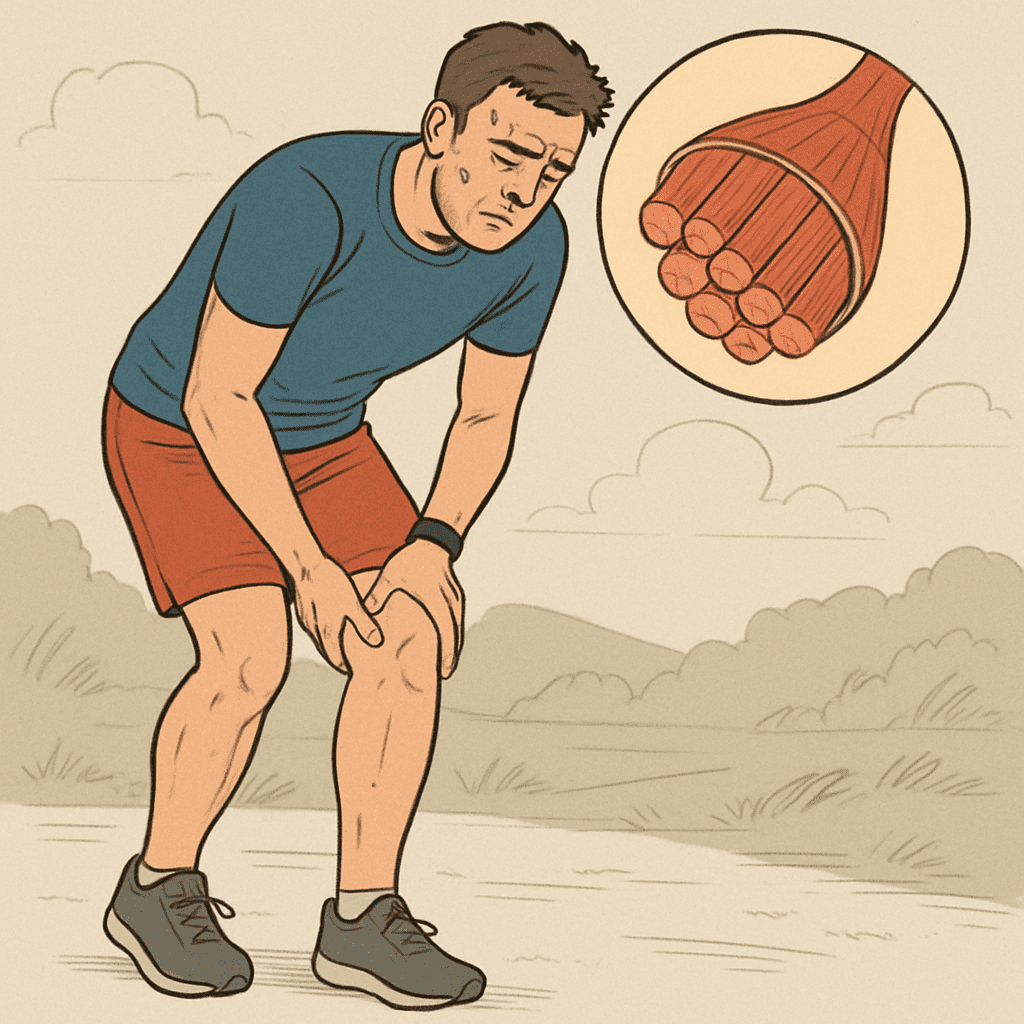
Immediately strike the outdated myth from your mind that accumulated lactate has „poisoned“ your muscles. According to the current consensus in sports science, lactic acid is broken down within a few hours, which is why this approach is completely useless as a fundamental explanation for muscle soreness. The actual cause lies much deeper in the tissue, where unaccustomed loads have left microscopic tears in the fundamental architecture of your muscles – the so-called microtrauma.
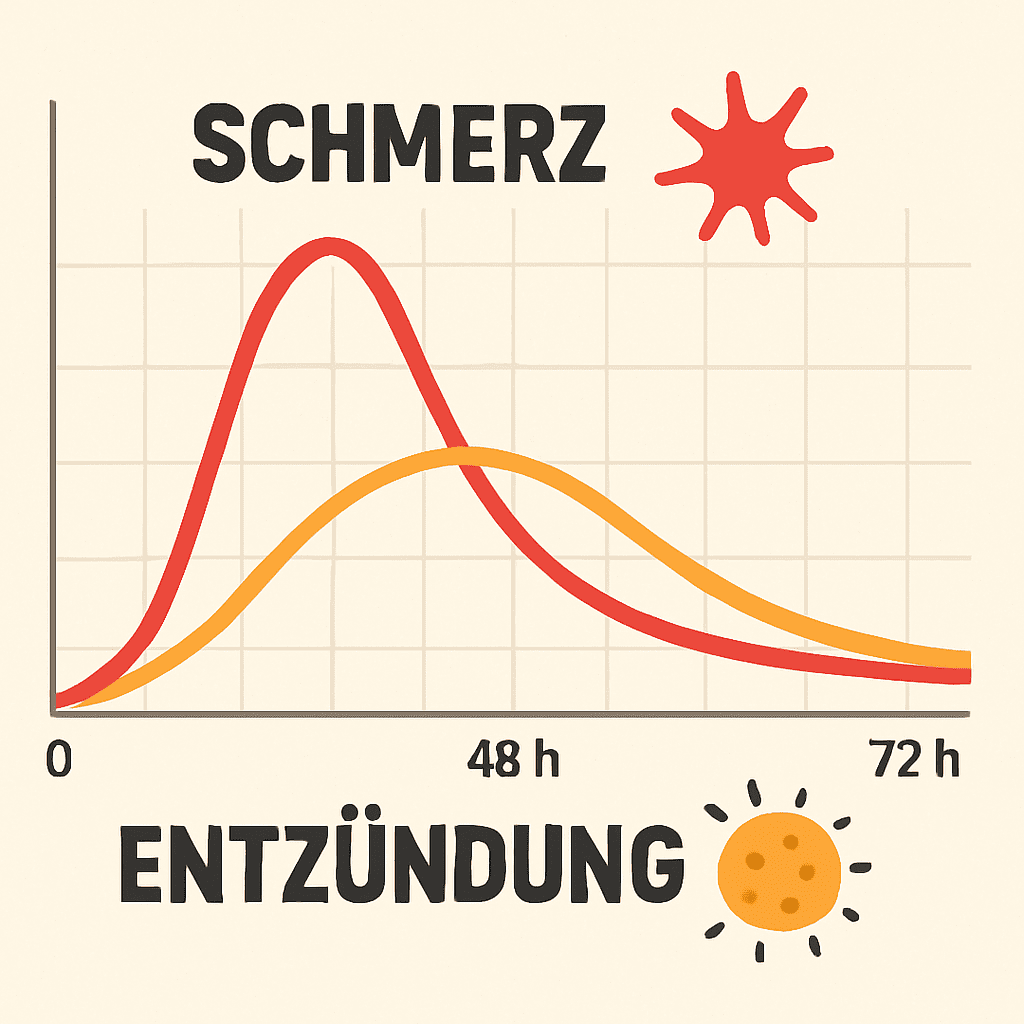
Current research data show that the throbbing pain is caused by the now-following, mandatory inflammatory process, which functions as a cellular clean-up command. This biological roadmap reveals the path from the initial physical tear through the body's intelligent repair mechanism to the strengthened, supercompensated fiber at the end of regeneration.
The Invisible Damage: How Eccentric Loading Causes Micro-tears in Your Muscle Fibers
Imagine slowly lowering a heavy grocery bag to the floor. In this moment, your muscles are working hard, lengthening under tension. Sports science calls this an eccentric contraction. Unlike simply shortening a muscle, this involves enormous mechanical tensile force on the tissue. It is precisely this decelerating movement that is the main reason why unfamiliar loads push our muscles to their limits.
A deep dive into the microscopic architecture of cells reveals: muscles are made of fibers, which in turn are composed of thousands of small, serially connected building blocks – the sarcomeres. These tiny force chambers are delimited by structural partitions, the so-called Z-discs. If high eccentric force is applied to the muscle, the sarcomeres are literally stretched apart. The Z-discs yield, and tiny structural damage occurs – the infamous micro-tears in the muscle fibers. This happens particularly intensely during the following movements:
- Running downhill or descending many stairs
- The controlled lowering of the body during a pull-up
- The slow, decelerating downward movement during the bench press
Every time you introduce unknown stimuli through an intense muscle soreness workout, the tissue is not yet adapted to these specific tensile forces and the fibers fray on a microscopic level. But interestingly, you don't feel pain at the moment of the tear, as the cells themselves do not possess pain receptors. The pain only occurs with a time delay, which can be explained by the subsequent inflammatory process.
Why tomorrow? The inflammatory process and the phenomenon of DOMS
When you can barely get out of bed in the morning, you're experiencing what science calls Delayed Onset Muscle Soreness. It's not acute injury pain, but rather a byproduct of a complex repair mechanism. To clear out the microscopic debris from torn muscle fibers, your immune system dispatches what are known as phagocytes. This biological cleanup crew starts working immediately after exercise, breaking down damaged cell components and making way for new growth.

This essential healing process of inflammatory reactions in the muscle, however, has consequences. Along with the immune cells, more water flows into the tissue, creating tiny swellings – so-called edema. This is where the mystery of the time delay is solved: only when these fluid accumulations increase significantly does noticeable mechanical pressure arise. Fine nerve endings outside the actual fibers, the nociceptors, register this tissue tension and finally fire the pressing pain signal to the brain.
Because this pressure builds up in the tissue only gradually, the pain often peaks after a full 48 hours. Fortunately, the duration of severe muscle soreness is limited: after three to five days, the micro-tears are usually firmly healed, and the swelling subsides. This days-long physical construction site vividly proves that our body reacts to tangible structural damage – which brings us directly to the persistent misconception that simple lactic acid is responsible for the agony.
Lactate is Innocent: The Definitive Refutation of the Most Common Fitness Myth
Forget everything you were taught in school sports about acidified muscles. The belief that lactic acid is responsible for the multi-day discomfort has been definitively disproven by modern sports science. While you may feel a burning sensation during your final squats, this is indeed intense metabolic stress from lactate, but this condition is extremely short-lived. The half-life of lactic acid in the human body is only about 20 minutes. By the time you leave the gym after your post-workout shower, your body has long since transported and recycled this metabolic product. The popular lactate myth thus lacks any biological basis for delayed pain.
Strictly speaking, we must therefore clearly distinguish between acute metabolic burning under exertion and later structural damage. The typical soreness results solely from tiny tears in the muscle fibers and the subsequent water pressure, not from acidic residues. A dull ache the following day is thus the best proof of ongoing repair. In contrast, a sudden, sharp, shooting pain marks the boundary between an ordinary adaptation process and a true muscle fiber tear.
Understanding Pain Thresholds: How to Differentiate Muscle Soreness from a True Muscle Tear
Anyone who has ever waddled down the stairs like a penguin after leg day knows the typical delayed onset muscle soreness. However, the difference between muscle soreness and a muscle tear is crucial for your health, as it separates a natural repair process from acute tissue destruction. Pay attention to these three warning signs for differentiation:
- Timepoint A tear shoots through lightning-fast during movement. Muscle soreness, on the other hand, builds up gradually after 12 to 24 hours.
- Type of pain: Injuries are sharp and pinpointed at a specific spot, while a hangover is widespread and dull.
- Loss of function A so-called „functional deficit“—that is, sudden weakness where the joint gives way or locks—always indicates a clear fiber tear.
Ignoring such clear bodily signals risks prolonged injuries and strains the entire organism. If you want to recognize early signs of overtraining, a glance beyond the musculature is also sufficient: An unusually elevated resting heart rate in the morning, sudden sleep disturbances, or persistent fatigue show that your central nervous system is overloaded and can no longer keep up with repair.
If acute, stabbing pain occurs, you must stop training immediately and apply the well-known RICE rule: Pcause, Eis, CCompression (pressure bandage) and Hmay be due to microtraumata swollen by cell water, ice would even slow down the healing process. Targeted regeneration measures, on the other hand, alleviate the harmless pain and accelerate biological remodeling.
The Regeneration Toolbox: Heat, Foam Rollers, and the Effect of Magnesium
While an acute tear requires immediate cooling, the strategy for classical repair processes is completely different. The often-asked question of heat or cold for muscle pain can be clearly answered biologically: heat wins. Targeted heat applications like a hot bath cause vasodilation (blood vessel dilation). These widened blood vessels act like multi-lane highways, on which your body transports fresh nutrients to the inflammation site and simultaneously efficiently disposes of the cellular waste from destroyed muscle fibers.

Mechanical aids offer an excellent complement to this thermal principle. The gentle use of a foam roller against hardened muscles works on the simple sponge principle. The slow, broad pressure from the outside gently squeezes the tissue, which significantly promotes so-called lymphatic drainage. Your body's own wastewater system thus transports away the accumulated tissue fluid from the inflammatory process more quickly, which noticeably reduces the agonizing pressure on the irritated nerve endings.
Chemically, many athletes try to speed up this healing process with supplements, but a realistic expectation is needed here. While micronutrients like magnesium and zinc are absolutely essential for muscle function, they don't patch up the microtraumas that occur overnight like magical glue. They merely ensure that your biological construction crew has the basic materials it needs. In addition to passive measures like heat and nutrition, the concept of active recovery offers another approach to pain relief.
Activity Despite Pain? Why Light Exercise Can Promote the Healing Process
Instinct usually advises complete rest for sore limbs, but modern sports science disagrees. Whether training is advisable despite muscle soreness primarily depends on the intensity. If already damaged muscle fibers are heavily strained again immediately, serious injuries threaten. However, if you drastically reduce the load, the principle of „active recovery“ applies. Gentle movement promotes constant blood flow in the irritated tissue. This self-pumping mechanism of the body transports much-needed nutrients directly to the inflammation site and quickly flushes out cellular waste.
For this rinsing effect to occur without new micro-trauma, the effort must remain so low that you could easily hold a conversation while doing it. The following activities define this optimal regeneration intensity:
- Extended walking
- Easy cycling without high resistance
- Relaxing swim
Those who wisely use this dynamic recovery can even prevent severe muscle soreness after training in the long term.
Summary and Your Roadmap to Pain-Free Progression
With this solid understanding, you no longer have to view post-workout pain as a mystery or an unavoidable evil. These microscopic tears simply signal the beginning of supercompensation, where the body rebuilds the damaged fibers even thicker and more resilient. Extreme muscle soreness is not a definitive proof of a successful workout; rather, steady, controllable adaptation drives long-term physical progress.
Apply these biological insights in your next training session by gradually increasing intensity rather than always training to muscle failure. Support the cellular cleanup crew through optimal nutrition for faster muscle recovery, providing adequate protein and fluids. If your muscles feel stiff in the morning, remember: the muscles aren't failing – they're adapting. Use this knowledge to refine your routine, intelligently manage training volume, and train injury-free in the long term.