
Juckreiz, Rötungen, schuppige Haut oder verfärbte Nägel – eine Pilzinfektion (Mykose) ist unangenehm und oft hartnäckig. Antimykotika sind Medikamente, die gezielt gegen Pilzerreger wirken, von Fußpilz bis hin zu schweren inneren Pilzerkrankungen.

What are antifungals and how do they work?
Antimykotika sind Medikamente gegen Pilzinfektionen. Sie richten sich gegen Fadenpilze (Dermatophyten), Hefepilze oder Schimmelpilze.
Die meisten Präparate greifen die Zellmembran oder Zellwand des Pilzes an – sie hemmen zum Beispiel die Produktion von Ergosterol, einem wichtigen Bestandteil der Pilzzellmembran. Ohne Ergosterol wird die Membran durchlässig und der Pilz stirbt ab. Da menschliche Zellen statt Ergosterol Cholesterin enthalten, bleiben sie dabei in der Regel unbeschadet.
In der Praxis wird zwischen zwei Wirkweisen unterschieden:
- Fungistatic Der Wirkstoff hemmt das Wachstum und die Vermehrung der Pilze. Das Immunsystem übernimmt dann das Abtöten der verbliebenen Erreger.
- Fungicide Der Wirkstoff tötet die Pilze direkt ab – häufig bei schwereren oder hartnäckigeren Infektionen.
Wenn der auslösende Pilzstamm zu Beginn nicht bekannt ist, setzen Ärzte häufig Breitbandantimykotika ein. Diese wirken gegen ein breites Spektrum an Erregern und ermöglichen eine schnelle Behandlung, noch bevor das Laborergebnis vorliegt.
Lokale vs. systemische Therapie
Je nach Art, Ort und Schwere der Infektion wird das Medikament lokal (äußerlich) oder systemisch (innerlich) angewendet.
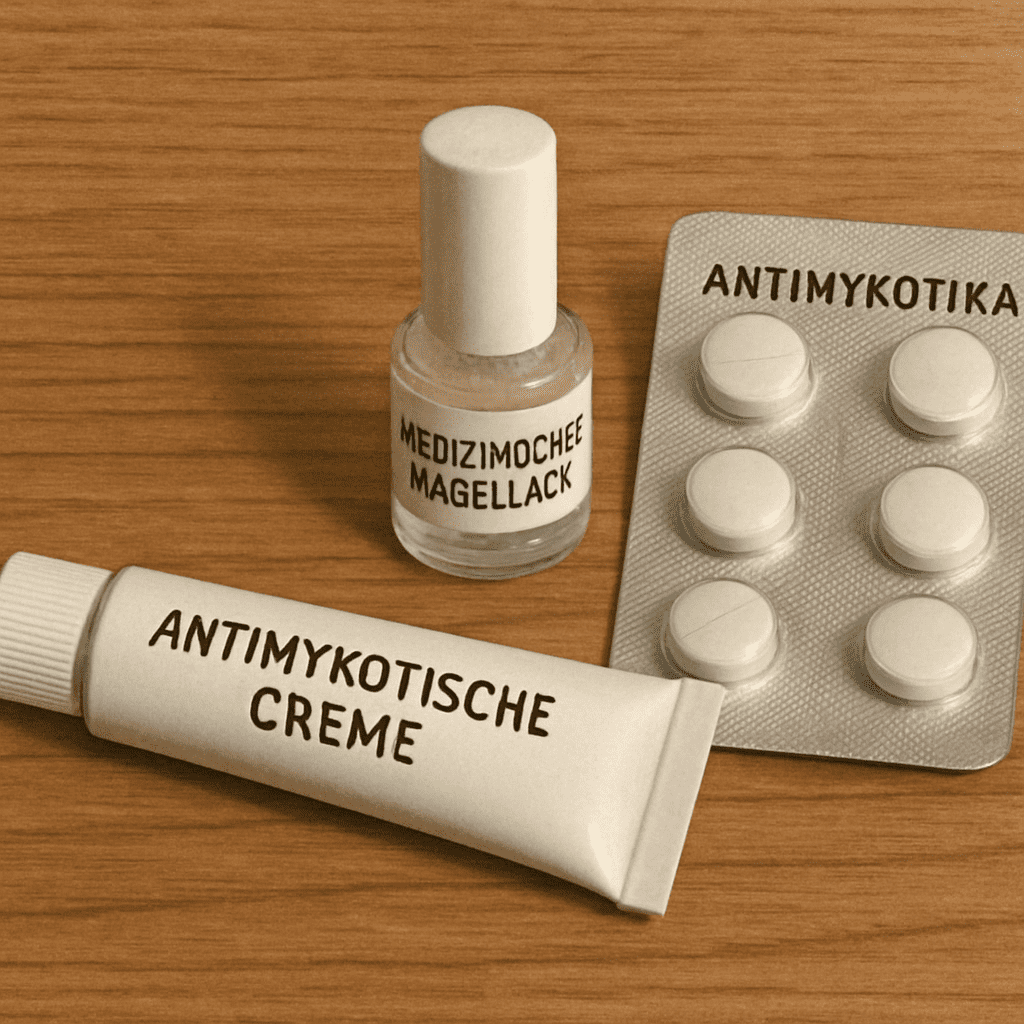
Lokale Behandlung: Cremes, Salben und Lacke
Bei oberflächlichen Hautinfektionen wie Fußpilz reicht meist eine Creme oder Salbe aus, die direkt auf die betroffene Stelle aufgetragen wird.
Eine häufige Frage lautet: Wie lange muss man Pilzsalbe anwenden? Die Behandlung sollte auch nach dem Abklingen der Symptome fortgeführt werden – in der Regel noch zwei bis drei Wochen. Pilzsporen können in der Haut verbleiben, auch wenn Juckreiz und Rötung bereits verschwunden sind. Ein zu frühes Absetzen erhöht das Rückfallrisiko.
Nagelpilz ist schwieriger zu behandeln, weil der Nagel eine harte Keratinschicht bildet, durch die Cremes kaum eindringen. Hier kommen medizinische Nagellacke zum Einsatz. Bei der Anwendung gilt:
- Den betroffenen Nagel vor dem Auftragen leicht anfeilen, damit der Lack besser eindringt.
- Der Lack gibt den Wirkstoff kontinuierlich an die Nagelplatte ab.
- Die Behandlung muss so lange fortgesetzt werden, bis der Nagel vollständig gesund nachgewachsen ist – an den Füßen kann das bis zu 12 Monate dauern.
Innerliche Behandlung: Wann Tabletten notwendig sind
Wenn Cremes und Lacke nicht ausreichen, werden Antimykotika als Tabletten, Kapseln oder Infusion verabreicht. Der Wirkstoff gelangt über den Blutkreislauf in den gesamten Körper.
Orale Antimykotika werden verschrieben, wenn:
- die Infektion sehr großflächig ist,
- tiefer liegende Hautschichten, Haarfollikel oder mehrere Nägel betroffen sind,
- eine Immunschwäche besteht und die Gefahr einer Ausbreitung erhöht ist.
Bei einer systemischen Mykose – also wenn Pilze innere Organe wie Lunge oder Blutbahn befallen (z. B. durch Candida oder Aspergillus) – können Symptome wie anhaltendes Fieber, Husten, Atemnot, Erschöpfung und Organschäden auftreten. Eine solche Infektion wird stationär mit hochdosierten intravenösen Antimykotika behandelt.
Over-the-counter or by prescription?
Leichte, oberflächliche Infektionen wie Fußpilz oder ein unkomplizierter Vaginalpilz lassen sich häufig mit rezeptfreien Mitteln aus der Apotheke behandeln. Apotheker können bei der Auswahl des geeigneten Präparats beraten.
Ein Arztbesuch ist erforderlich, wenn Nägel großflächig betroffen sind, die Infektion auf Kopf oder Gesicht übergreift, Bläschen entstehen oder Schmerzen auftreten. Tabletten gegen Pilzinfektionen sind grundsätzlich verschreibungspflichtig und müssen ärztlich begleitet werden.
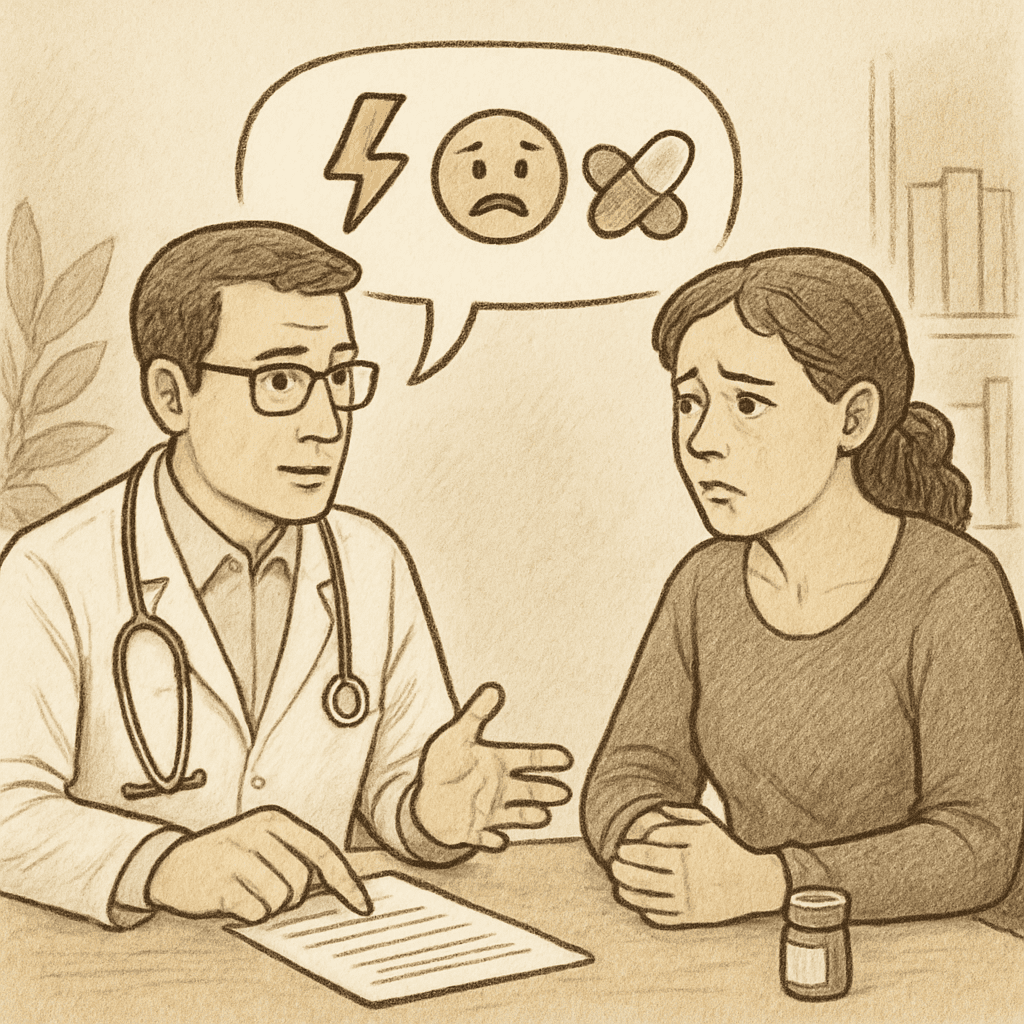
Nebenwirkungen und Wechselwirkungen
Bei der lokalen Therapie beschränken sich Nebenwirkungen meist auf die behandelte Stelle: leichte Rötungen, vorübergehendes Brennen oder Spannungsgefühle sind möglich.
Bei oralen Antimykotika können Nebenwirkungen stärker ausgeprägt sein. Häufig sind:
- Gastrointestinal distress (nausea, diarrhea, abdominal pain)
- Headache
- Changes in the sense of taste
- In seltenen Fällen: Leberbelastung – bei längerer Einnahme werden daher oft die Leberwerte kontrolliert.
Wichtig sind auch mögliche Wechselwirkungen mit anderen Medikamenten. Viele orale Antimykotika – besonders aus der Gruppe der Azole – hemmen bestimmte Leberenzyme (Cytochrom-P450-System), die für den Abbau anderer Wirkstoffe zuständig sind. Werden gleichzeitig Blutverdünner, bestimmte Cholesterinsenker oder Blutdruckmittel eingenommen, kann deren Konzentration im Blut ansteigen und zu Überdosierungen führen. Informieren Sie Ihren Arzt oder Apotheker daher always über alle regelmäßig eingenommenen Medikamente.
Successful Therapy: Preventing Resistance and Relapses
In modern medicine, not only the antibiotic resistance of bacteria is a cause for concern, but increasingly also the resistance of fungi. By using antifungals as medication, you can actively contribute to Avoid antifungal resistance to help.
The most important basic rule here is: Never discontinue therapy prematurely! If you stop treatment as soon as the itching disappears, the most resistant fungal cells survive. These can multiply again and will be less susceptible to the medication next time. Strictly adhere to the doctor-prescribed treatment duration or the package insert.
Just as important as the actual healing is the Prevention of relapse after fungal treatment. Mushrooms thrive in moist, dark, and warm conditions. With these simple everyday tips, you can take away the breeding ground for pathogens:
- Dryness is key Dry yourself thoroughly after showering, especially between your toes and in skin folds. A hairdryer on a cool setting can work wonders here.
- Breathable clothing: Wear socks made of cotton or special breathable materials. Change them daily and wash them at at least 60 degrees Celsius. Avoid synthetic, non-breathable shoes.
- Disinfection: During and after treatment for foot or nail fungus, you should regularly disinfect your shoes with a special antifungal shoe spray.
- Protection in public areas: Never walk barefoot in swimming pools, saunas, or hotel rooms. Always wear flip-flops.
- Sharing towels is taboo: Use your own towel and change it frequently. Again, washing at 60 degrees reliably kills most pathogens.
Conclusion: Patience and consistency lead to success
The use of antifungal drugs has revolutionized the treatment of bothersome and dangerous fungal infections. From simple antifungal ointments for mild athlete's foot to life-saving systemic therapy for severe internal mycoses, there is a suitable active ingredient for every problem.
However, the key to successful therapy lies not only in the medication itself but in the user's discipline. Anyone who understands the mechanism of action of antifungal agents knows that fungi are tough opponents. Whether you apply cream daily, consistently use nail polish for fungus correctly, or take pills – never stop treatment too early. If you also pay attention to good hygiene and dry skin conditions, fungal infections will stand no chance in the long run.
Note: This article is for informational purposes only and does not replace a doctor's visit. If you suspect a serious fungal infection, please consult a dermatologist or your family doctor immediately.
Quellen
