
Wenn Bakterien im Mund Zucker abbauen, entsteht Säure, die den Zahnschmelz nach und nach aufweicht. Dieser Vorgang heißt Demineralisation und ist eine der Hauptursachen für Karies – oft schmerzlos, aber über Zeit schädlich.
Speichel wirkt dem entgegen, indem er Säuren neutralisiert und Mineralien zurückgibt. In dieser frühen Phase lässt sich der Prozess noch umkehren, wenn die Mundhygiene stimmt.
Karies oder bloße Verfärbung?
Karies beginnt oft schmerzfrei. Bevor ein Loch entsteht, zeigt sich häufig ein sogenannter „White Spot“ – ein kreideweißer Fleck, der auf Mineralverlust hinweist. In dieser Phase ist der Prozess noch reversibel.
Ein kurzer Vergleich:
- Harmless discoloration: Brownish, smooth surface, painless.
- White Spot (Pre-Cavity Lesion): Matt-weiß, leicht raue Textur. Fluoridhaltige Zahnpasta kann den Schmelz in diesem Stadium noch remineralisieren.
- Active Caries Dunkel, mit spürbarer Vertiefung. Wenn Kälte Schmerzen verursacht, hat die Karies das Dentin erreicht – dann sollte ein Zahnarzt aufgesucht werden.

Wie Bakterien Säure produzieren – und was Speichel dagegen tut
Nach jedem zuckerhaltigen Bissen senken Bakterien den pH-Wert im Mund und greifen den Zahnschmelz an. Dieser Säureangriff dauert etwa 20 Minuten. Wer häufig snackt, hält diesen Angriff nahezu dauerhaft aufrecht – das ist belastender als ein einziges Dessert nach der Mahlzeit.
Speichel neutralisiert Säuren und gibt Mineralien zurück. Zuckerfreier Kaugummi regt den Speichelfluss zusätzlich an. Damit der Speichel wirken kann, muss der Zahnbelag regelmäßig entfernt werden – darunter arbeiten die Bakterien ungestört.
Richtig Zähneputzen: Die KAI-Methode
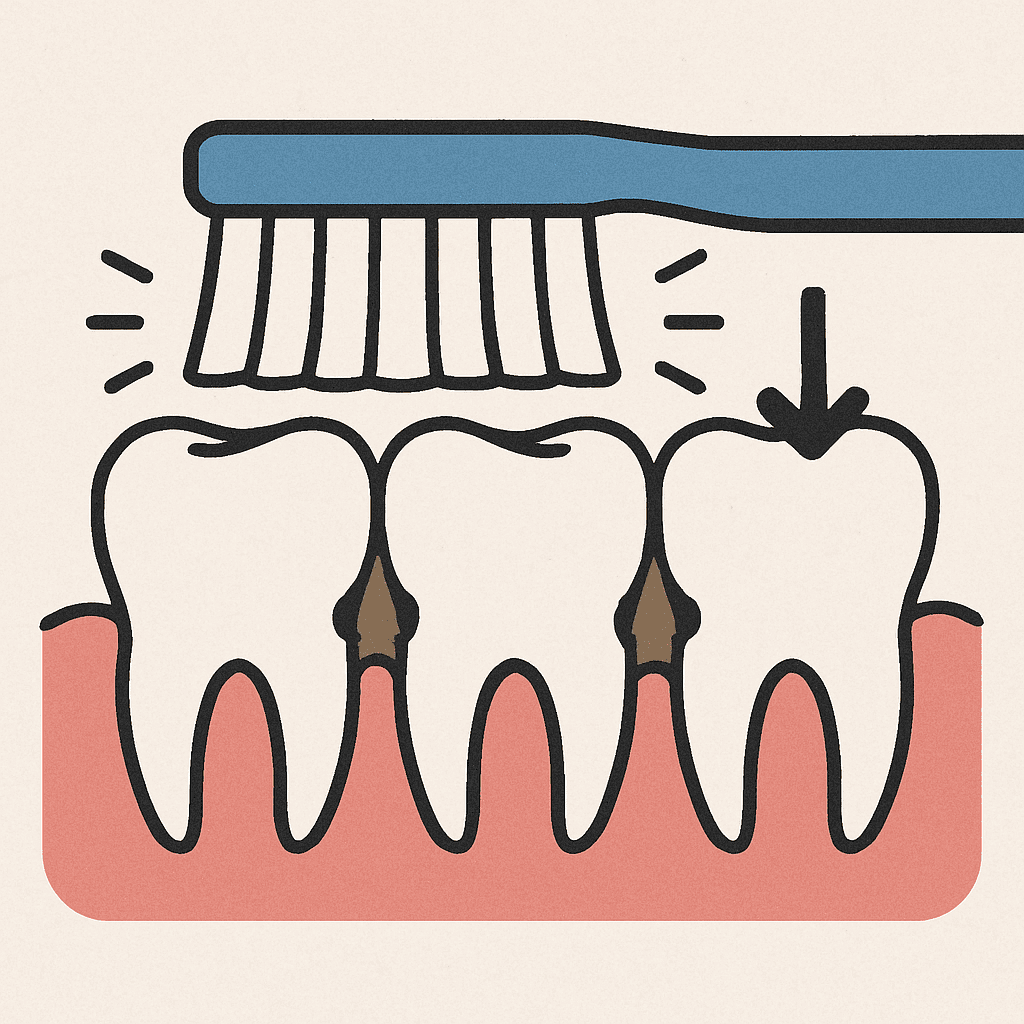
Zahnbelag lässt sich nicht durch Druck, sondern durch Systematik entfernen. Hartes Schrubben schadet dem Zahnfleisch. Die KAI-Methode hilft, keine Fläche auszulassen:
- Kauflächen: Mit kurzen Rüttelbewegungen reinigen.
- AOuter surfaces: Brush in large circles with teeth loosely closed.
- Innenflächen: Vom Zahnfleisch zum Zahn sanft auswischen.
Fluoridhaltige Zahnpasta unterstützt die Remineralisation: Fluorid bindet Mineralien aus dem Speichel und härtet aufgeweichten Schmelz. Für Erwachsene empfiehlt sich ein Fluoridgehalt von 1450 ppm.
Zahnzwischenräume reinigen
Eine Zahnbürste erreicht nur etwa 60 Prozent der Zahnoberflächen. Die Zwischenräume bleiben sonst ungereinigt – ein häufiger Ausgangspunkt für Karies.
Die Wahl des richtigen Mittels hängt von der Anatomie ab:
- Narrow tooth gaps Zahnseide gleitet sanft durch schmale Kontaktpunkte.
- Larger gaps: Interdentalbürsten reinigen hier gründlicher.
Leichtes Bluten beim ersten Anwenden ist normal und kein Grund zum Aufhören. Es kann auf eine Entzündung des Zahnfleisches (Gingivitis) hinweisen, die mit regelmäßiger Pflege meist abklingt.
Ernährung und Zahngesundheit
Nicht nur was, sondern wie oft jemand isst, beeinflusst das Kariesrisiko. Häufiges Naschen hält die Säureangriffe dauerhaft aufrecht. Süßes direkt nach einer Hauptmahlzeit ist weniger schädlich als verteilte Snacks über den Tag.
Zitronenwasser etwa wirkt trotz seines gesunden Rufs säurebelastend auf den Zahnschmelz. Xylitol (Birkenzucker) ist eine sinnvolle Alternative: Kariesbakterien können ihn nicht verwerten.
- Tooth-friendly Käse, Nüsse, Xylitol-Kaugummis.
- Zahnbelastend: Klebrige Trockenfrüchte, Zitronenwasser, häufiges Snacken.
Karies bei Kindern
Milchzähne sind wichtige Platzhalter für das bleibende Gebiss. Karies im Milchgebiss kann im schlimmsten Fall auch die noch nicht durchgebrochenen Zähne schädigen.
Bei der Zahnpasta gilt: Babys brauchen nur eine reiskorngroße Menge, ab dem zweiten Geburtstag etwa eine erbsengroße. Fluorid härtet den weichen Zahnschmelz von Kindern und schützt vor Säureangriffen.
Gegen Zahnarztangst bewährt sich die „Tell-Show-Do“-Methode: Jeden Schritt erklären, zeigen und dann erst durchführen – auch am Kuscheltier lässt sich das gut üben.
When the damage is done: Filling materials compared and the path to healing
Sometimes, despite good care, acid erodes hard tooth enamel. Prompt intervention is worthwhile, as early repair often costs 90 percent less than a later implant. But when should you go to the dentist for pain? Ideally, immediately at the first twinge of sensitivity. This comparison of filling materials will help you close the hole:
- Composite (Plastic): Tooth-colored and unobtrusive, ideal for visible front teeth, mid-range price.
- Amalgam Extremely robust and inexpensive, primarily suitable for hidden molars due to its silver appearance.
If cavities reach the tooth nerve inside, the body's alarm system sounds with strong throbbing. When a root canal treatment is explained in this situation, one fact is particularly important: this procedure does not cause pain, but rather ends it! The dentist gently removes the inflamed tissue and seals the tooth root to preserve your natural tooth pain-free in the jaw.
Relieve toothaches and lower costs: Why a professional cleaning is your best investment
A sudden throbbing pain on the weekend is unpleasant. In such a case, an unavoidable trip to the dentist first thing the next morning is advisable. To safely bridge the waiting time until your appointment and alleviate toothache without medication, these three tried-and-true home remedies can help:
- Clove oil Applied directly with a cotton swab, it slightly numbs the tooth.
- Saltwater rinse Applied lukewarm, it soothes the tissue and inhibits bacteria.
- Cold pack On the outside of the cheek, it cools unpleasant swelling.
Even with the best care, soft plaque sometimes hardens into yellowish tartar. This crust sits like concrete on the tooth enamel and can no longer be scrubbed away at home. During a professional dental cleaning (PZR), these hard bacterial hiding places are gently loosened, and the tooth surface is polished so smooth that new plaque can barely adhere.
Fortunately, this valuable investment in your smile is often financially supported. Learn about your health insurance's coverage for professional dental cleanings, as many insurers generously subsidize the treatment.
Your Personal Roadmap to Cavity-Free Living: Small Habits for Lifelong Dental Health
You don't have to wait for a painful hole to form. Those who understand that tooth decay is a continuous tug-of-war can actively protect their tooth enamel instead of just waiting and having damage repaired.
Building a strong defense only takes a few minutes each day. This small checklist helps you maintain a healthy balance in your mouth permanently:
- Mornings: Brush your teeth thoroughly to deliver fluoride and harden tooth enamel for the day.
- Lunch: Simple nutrition tips to implement, such as drinking a glass of water after a sugary snack to wash away the acids directly.
- Evening Clean between your teeth and brush them to completely remove sticky plaque before bacteria can produce acid overnight.
Regular semi-annual check-ups with your dentist ensure that even the smallest chalky spots are detected while they are still reversible. With these consistent routines, you create the best foundation for keeping your teeth healthy for a lifetime.
Quellen
